Sea moss is the common name for red seaweeds, and Irish sea moss usually means Chondrus crispus. It can contain iodine and unwanted metals, and human research is limited, so species, sourcing and testing matter.
Sea moss is the common name for a group of red seaweeds. When a product says Irish sea moss, it usually means Chondrus crispus, a seaweed that grows on cold North Atlantic shores and has long been used as food and as a thickener. Today it is sold dried, as gel, as powder and in capsules, often with large health claims attached. Most of those claims are not backed by human studies.
What sea moss actually is
The National Library of Medicine's LactMed database defines sea moss, or Irish moss, as Chondrus crispus, a type of red seaweed used as food and as medicine. It adds that no medicinal value has been proven. The seaweed contains carrageenan, a polysaccharide that is widely used as a food additive, along with other carbohydrates and a range of minerals, including iodine.
That last point shapes everything else in this guide. Seaweeds take up minerals from the water they grow in. That is why they can be a concentrated source of iodine, and it is also why they can carry unwanted elements such as arsenic, lead, cadmium and mercury. LactMed lists all four as possible contaminants in sea moss.
Sea moss, bladderwrack, kelp and nori are not the same thing
Seaweeds are grouped by color, and the groups differ in chemistry. Sea moss (Chondrus crispus) is a red alga. Bladderwrack (Fucus vesiculosus) is a brown alga, and clinical reviews group it with other brown seaweeds. Nori, the sheet used for sushi, is a red alga from a different genus. Another genus of red seaweed, Gracilaria, has its own body of research. A label that says only "sea moss" does not tell you which of these you are buying.
Species identification matters because the numbers move so much. In a 2004 analysis of 12 commercially available edible seaweeds, iodine ranged from 16 micrograms per gram in nori to more than 8,000 micrograms per gram in one processed kelp product (Teas and colleagues, Thyroid). The NIH Office of Dietary Supplements reports a similar spread, from 16 to 2,984 micrograms per gram, across seaweeds sold in whole or sheet form. A later study of three North Atlantic species found that iodine content was species specific and, for one of them, varied by sampling location.
The full botanical name (for example Chondrus crispus), the part and form of the product, the country or region of harvest, and the iodine amount per serving. If a label gives none of these, you cannot compare it with anything.
Nutrition: what is known and what is repeated
Seaweed is one of the best food sources of iodine, according to NIH. That is a real nutritional feature, and it is also the main safety consideration. In one study of North Atlantic seaweeds, as little as 32 milligrams of dried Saccharina kelp met the recommended daily iodine intake for most healthy adults, while the red alga Palmaria took about 2 grams. See our guide to sea moss and iodine for the official numbers.
You will also see claims that sea moss provides 92 of the 102 minerals the body needs. That figure does not appear in the NIH, FDA or peer-reviewed sources cited here, and we could not trace it to a measurement. Mineral content depends on the species, where it grew and how it was processed, so a single number cannot describe all sea moss.
What the research says
A 2024 review in Marine Drugs summarized the chemistry and biological properties of Chondrus species. It reported that most of the evidence for effects such as antioxidant, anti-inflammatory and immune activity comes from laboratory and animal studies, and it states plainly that data from clinical studies are limited. Findings in cells and animals are a reason to do human research. They are not evidence that a product works in people.
NCCIH, the NIH center for complementary and integrative health, makes a related point about supplements in general: products you buy can differ in important ways from the products tested in studies. A trial of a purified extract says little about a capsule, a gel or a bag of dried seaweed.
Safety questions to settle before you buy
- Thyroid conditions. Excess iodine can affect the thyroid. NIH notes that people with autoimmune thyroid disease may react to iodine intakes that are considered safe for the general population. Ask your clinician first.
- Pregnancy and breastfeeding. LactMed reports that maternal consumption of excess iodine from seaweed has caused thyroid suppression in breastfed infants, and recommends avoiding sea moss while breastfeeding unless iodine and heavy metal levels have been shown to be low enough to be safe.
- Medications. Iodine can interact with some medicines, including antithyroid drugs. Tell your pharmacist what you take.
- Contaminants. Because heavy metals can come from the water, a lab report matters more for seaweed than for many other foods. We explain how to read a sea moss lab report step by step.
Claims worth treating with caution
Under U.S. rules, a dietary supplement label cannot say the product diagnoses, treats, cures or prevents a disease. Phrases about "detox," "cleansing," "healing" or "balancing hormones" go beyond what the evidence supports, whether they appear on a label, in a video or in an advertisement. Supplement labels may carry structure and function statements, and those must be accompanied by the FDA disclaimer that the statement has not been evaluated by the agency. A statement with that disclaimer is a manufacturer's claim, not a regulatory finding. The FDA also does not approve dietary supplements before they are sold.
Sourcing, testing and what a good listing shows
A strong sea moss listing names the species, says where and how the seaweed was harvested and dried, states the net weight and serving size, and publishes a laboratory report for the specific batch. A badge that says "third-party tested" does not substitute for the report. We cover the details in our lab report guide, and compare formats in gel vs capsules vs raw.
If you want to see how one retailer presents this information, read our Alkaline Herb Shop profile, which separates the retailer's claims from what we verified. Browse the full sea moss category or start with these listings:
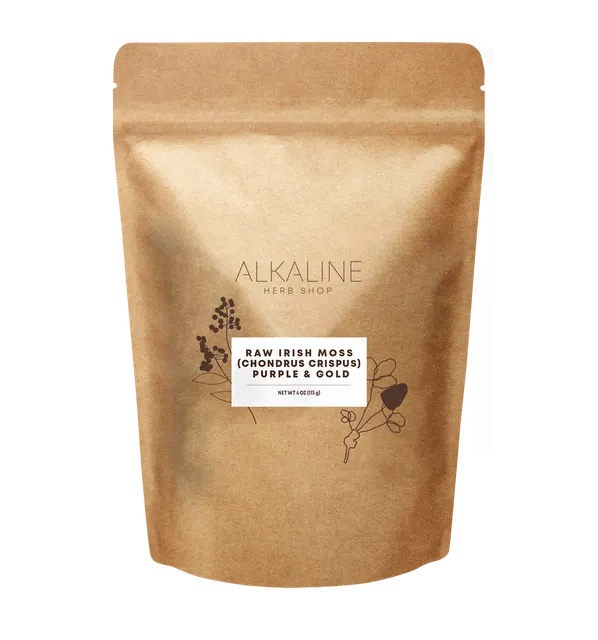
Raw Purple & Gold Sea Moss 4 oz (Chondrus Crispus, Irish Sea Moss)
Whole dried Chondrus crispus in a purple and gold mix. You rinse, soak and blend it into gel yourself. The retailer says this bag is from Canada.
- Format: Raw (dried) sea moss
- Size: 4 oz bag
- Category: Sea Moss
- Price: $29.99 (checked November 3, 2026)
- Lab evidence: Lab results not reviewed by CannaWize
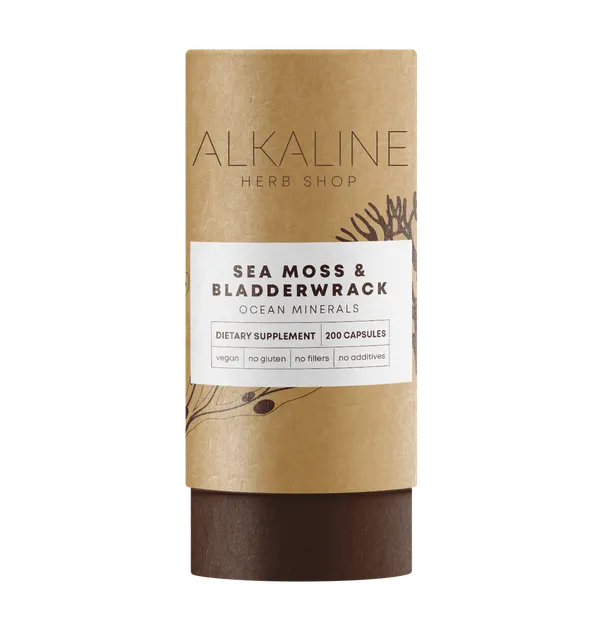
Sea Moss & Bladderwrack Supplement 200 Capsules
Capsules that pair Irish sea moss with bladderwrack, 900 mg of each in the three-capsule serving the retailer lists. High in iodine by the retailer's own numbers.
- Format: Capsules
- Size: 200 vegetable capsules
- Category: Sea Moss
- Price: $49.99 (checked November 3, 2026)
- Lab evidence: Merchant states third-party testing. CannaWize has not reviewed the results.
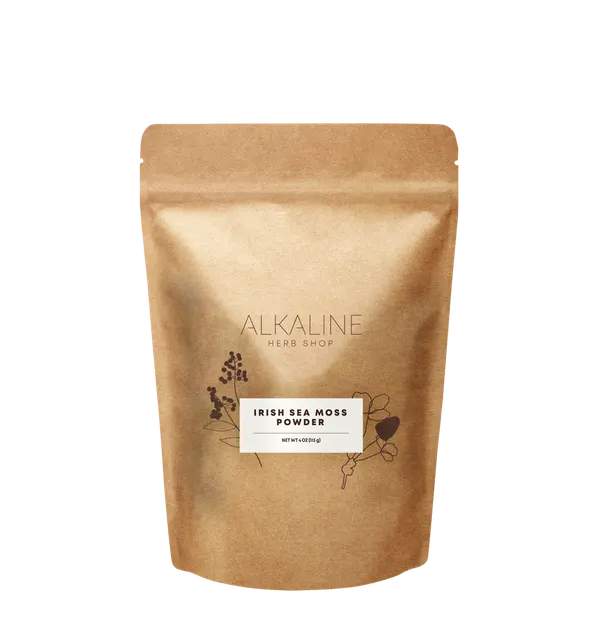
Irish Sea Moss Powder 4 oz (Musgo Marino, Chondrus Crispus)
Chondrus crispus ground to a powder, 4 oz. Powder skips the soaking step, but dosing is by the spoonful, so check the stated serving size.
- Format: Powder
- Size: 4 oz
- Category: Sea Moss
- Price: $24.99 (checked November 3, 2026)
- Lab evidence: Lab results not reviewed by CannaWize
Affiliate disclosure: CannaWize may earn a commission if you buy through links on this page, at no extra cost to you. CannaWize does not sell these products. You complete your purchase on the retailer's website, and the retailer handles pricing, shipping and returns.
Common questions
Is sea moss the same as Irish moss?
Usually yes. LactMed treats the two names as the same seaweed, Chondrus crispus. Because "sea moss" is a loose retail term, check the botanical name on the label.
Does sea moss have proven health benefits?
Not in the way marketing suggests. Reviews describe laboratory and animal findings and limited clinical data. LactMed states that no medicinal value has been proven.
Is sea moss safe to take every day?
That depends on the iodine and contaminant content of the specific product, the serving size and your health situation. There is no universal answer, and we do not give personal dosing advice. A clinician or pharmacist can help you decide.
Frequently asked questions
What is sea moss made of?
Sea moss, or Irish moss, is the red seaweed Chondrus crispus. It contains carrageenan and other carbohydrates and a range of minerals, including iodine, and it can also contain arsenic, lead, cadmium and mercury from the water where it grew, according to the NIH LactMed entry on sea moss.
Is sea moss the same as other seaweed?
No. Sea moss is one red seaweed. Bladderwrack is a brown seaweed, and nori is a different red seaweed. Iodine in 12 commercial seaweeds ranged from 16 micrograms per gram in nori to more than 8,000 in one kelp product, per a 2004 analysis in Thyroid, so the species matters.
Does sea moss have proven health benefits?
Not in people. LactMed says no medicinal value has been proven, and a 2024 review of Chondrus species describes mostly laboratory and animal findings with limited clinical data.
Is sea moss safe during pregnancy or breastfeeding?
LactMed reports that excess iodine from seaweed has suppressed thyroid function in breastfed infants and advises avoiding sea moss while breastfeeding unless iodine and heavy metal levels have been shown to be low. If you are pregnant or breastfeeding, ask your clinician before using it.
How much sea moss should I take per day?
There is no established recommended amount of sea moss, and we do not give personal doses. What is established is iodine: the NIH sets the adult recommended intake at 150 micrograms a day and the upper limit at 1,100 micrograms a day from all sources (NIH Office of Dietary Supplements). Check the iodine per serving on your product and ask a clinician if you have a thyroid condition.
Sources and further reading
- NIH LactMed (Drugs and Lactation Database): Sea Moss
- Park et al., Marine Drugs 2024: Chemical constituents and biological properties of Chondrus species
- NIH Office of Dietary Supplements: Iodine, health professional fact sheet
- Teas et al., Thyroid 2004: Variability of iodine content in common commercially available edible seaweeds
- Roleda et al., Food Chemistry 2018: Iodine content in bulk biomass of wild-harvested and cultivated edible seaweeds
- Khandwal et al., Nutrients 2025: Polysaccharides from the red seaweed Gracilaria, a narrative review
- Keleszade et al., Molecules 2021: Clinical efficacy of Ascophyllum nodosum and Fucus vesiculosus in metabolic syndrome, a review of clinical trials
- NCCIH: Using Dietary Supplements Wisely