NIH sets the adult recommended iodine intake at 150 mcg a day and the tolerable upper limit at 1,100 mcg a day from all sources. Seaweed iodine varies widely, so the number on your product matters.
For most healthy adults the U.S. recommended iodine intake is 150 micrograms a day, and the tolerable upper limit is 1,100 micrograms a day from food and supplements combined. Sea moss and other seaweeds can supply a large share of that range in one serving, and the amount varies widely between species and products. That is why iodine, more than any other nutrient, is the question to settle before using a seaweed supplement.
What iodine does
The NIH Office of Dietary Supplements explains that iodine is an essential component of the thyroid hormones thyroxine (T4) and triiodothyronine (T3), which regulate protein synthesis, enzyme activity and overall metabolic activity. Without enough iodine the thyroid can enlarge, a condition called goiter. Iodine is added to some salt, and the NIH lists seaweed such as kelp, nori, kombu and wakame among the best food sources.
Official reference numbers
These come from the NIH Office of Dietary Supplements fact sheet, which summarizes values set by the National Academies.
| Group | Recommended intake (RDA) | Upper limit (UL) |
|---|---|---|
| Adults 19 and older | 150 mcg a day | 1,100 mcg a day |
| Ages 14 to 18 | 150 mcg a day | 900 mcg a day |
| Pregnancy | 220 mcg a day | 1,100 mcg a day (adults) |
| Lactation | 290 mcg a day | 1,100 mcg a day (adults) |
The NIH notes that the upper limit does not apply to people receiving iodine for medical treatment, who should be under a physician's care. It also notes that long-term intakes above the limit raise the risk of adverse health effects.
Why seaweed iodine is hard to predict
The NIH reports that iodine in commercially available whole or sheet seaweeds ranges from 16 micrograms per gram to 2,984 micrograms per gram. A 2004 study in Thyroid analyzed 12 seaweed species and found a range from 16 micrograms per gram in nori to more than 8,000 in a processed kelp product. The same study found large differences within a single kelp depending on how mature the blade was and whether it had been sun-bleached, and noted that iodine can be lost in cooking or storage, which makes the iodine in prepared foods difficult to estimate. A separate multi-country analysis of three North Atlantic species concluded that species-specific variation determines a safe daily amount.
For a buyer, this means the species name, the part of the plant and the batch all matter, and the only dependable number is one measured in the specific product.
Reading iodine on a label
- Find the amount per serving in micrograms (mcg). If the Supplement Facts panel omits iodine, ask the seller whether it was measured. The NIH points out that labels cannot be relied on to identify foods that naturally contain iodine, such as seaweed.
- Convert percent Daily Value. The Daily Value for iodine is 150 mcg. A label that says 100 percent contains about 150 mcg. The adult upper limit of 1,100 mcg is about 733 percent of the Daily Value.
- Count servings honestly. If a serving is three capsules, one capsule is a third of the stated number.
- Add other sources. Multivitamins often contain 150 mcg, according to the NIH, and iodized salt, dairy and seafood contribute too.
Here is a worked example using the retailer's own numbers. A 200-capsule sea moss and bladderwrack product states 561 micrograms of iodine per three-capsule serving on its product page, and 552 micrograms on its lab summary page. Either figure is roughly 370 percent of the Daily Value and a little over half of the adult upper limit, from that serving alone. We have not reviewed the underlying lab report. Our product guide explains the discrepancy.
What too much iodine can do
The NIH states that high iodine intake can produce some of the same problems as too little, including goiter, elevated TSH and hypothyroidism, because excess iodine in susceptible people inhibits thyroid hormone synthesis. Iodine-induced hyperthyroidism can also occur. The fact sheet adds that studies have linked excessive iodine to thyroiditis and thyroid papillary cancer. Acute poisoning is rare and usually involves doses of many grams.
A 2019 case report in Medicine described a 70-year-old woman with no prior thyroid disease who developed transient hyperthyroidism about three months after taking tablets containing kelp. Her thyroid function returned to normal after she stopped them and received antithyroid treatment. The authors concluded that people who use kelp-based supplements should be told of the thyroid risk and that such supplements should be taken under physician supervision with monitoring. A single case does not tell us how common this is, but it illustrates the mechanism the NIH describes.
When professional guidance is important
Speak with a clinician before using a seaweed supplement if any of these apply:
- You have or have had a thyroid condition, including autoimmune thyroid disease. The NIH notes that such people, and people with iodine deficiency, may experience adverse effects at intakes considered safe for the general population.
- You take medicines that affect the thyroid. The NIH notes that high iodine with antithyroid medications such as methimazole can have an additive effect and could cause hypothyroidism.
- You are pregnant, trying to conceive or breastfeeding. LactMed reports that excess iodine from maternal seaweed intake has caused thyroid suppression in breastfed infants and recommends avoiding sea moss while breastfeeding unless iodine and heavy metal levels are shown to be low.
- You are scheduled for radioactive iodine treatment or thyroid testing, where a clinician may give specific diet instructions.
The NIH also lists potassium iodide as raising the risk of high potassium when combined with ACE inhibitors or potassium-sparing diuretics. That finding concerns potassium iodide specifically, but it illustrates why a pharmacist should review all supplements you take.
- Is iodine listed in micrograms per serving?
- Does a lab report for your lot confirm the number?
- How many servings would you take in a day, and what else adds iodine?
- Does the total approach the 1,100 mcg adult upper limit?
- Do you have a condition, medication or life stage that calls for a clinician's input?
What we do not do here
This guide gives reference values, not a personal dose. Your right amount depends on your diet, health and medications, which only you and your clinician can weigh. For help evaluating test documentation, see how to read a sea moss lab report, and for format differences see gel vs capsules vs raw.
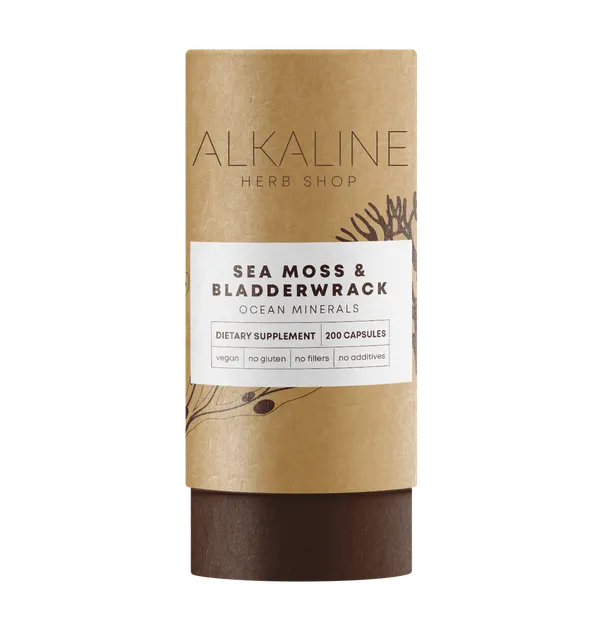
Sea Moss & Bladderwrack Supplement 200 Capsules
Capsules that pair Irish sea moss with bladderwrack, 900 mg of each in the three-capsule serving the retailer lists. High in iodine by the retailer's own numbers.
- Format: Capsules
- Size: 200 vegetable capsules
- Category: Sea Moss
- Price: $49.99 (checked November 3, 2026)
- Lab evidence: Merchant states third-party testing. CannaWize has not reviewed the results.
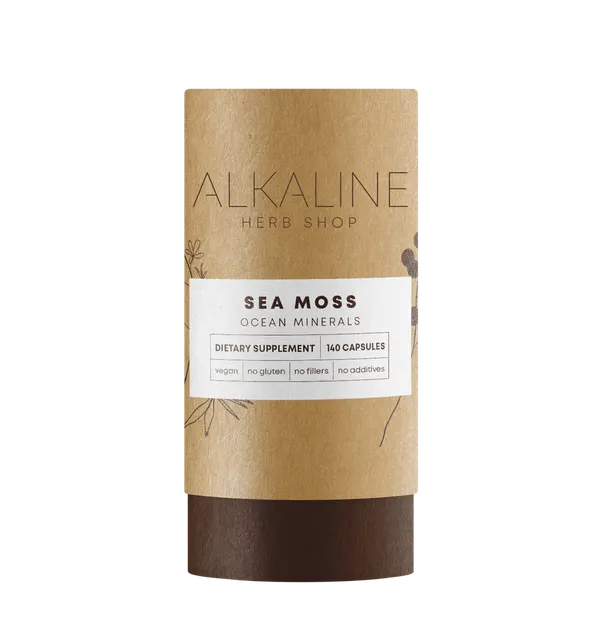
Sea Moss Supplement 140 Capsules
Single-ingredient sea moss capsules, 140 per bottle. A simpler label than the combination products, which can make serving comparisons easier.
- Format: Capsules
- Size: 140 capsules
- Category: Sea Moss
- Price: $41.99 (checked November 3, 2026)
- Lab evidence: Lab results not reviewed by CannaWize
Affiliate disclosure: CannaWize may earn a commission if you buy through links on this page, at no extra cost to you. CannaWize does not sell these products. You complete your purchase on the retailer's website, and the retailer handles pricing, shipping and returns.
Frequently asked questions
How much iodine is too much?
For adults 19 and older, the NIH lists a tolerable upper intake level of 1,100 micrograms a day from food and supplements combined, and a recommended intake of 150 micrograms a day. The upper limit does not apply to people receiving iodine as medical treatment. Source: NIH Office of Dietary Supplements.
Is sea moss high in iodine?
It can be, but the amount varies. Seaweed is one of the best food sources of iodine, and commercial seaweeds range from 16 to 2,984 micrograms per gram according to the NIH. The only dependable number is one measured in your specific product.
Can too much iodine cause thyroid problems?
Yes. The NIH says high iodine intake can cause goiter, elevated TSH and hypothyroidism in susceptible people, and iodine-induced hyperthyroidism can also occur. A 2019 case report described transient hyperthyroidism after kelp tablets in a woman with no prior thyroid disease.
Can I take sea moss with thyroid medication?
Ask your clinician or pharmacist first. The NIH notes that high doses of iodine with antithyroid medications such as methimazole can have an additive effect and could cause hypothyroidism, and that people with autoimmune thyroid disease may react to intakes considered safe for others.
How do I convert percent Daily Value to micrograms?
The Daily Value for iodine is 150 micrograms. Multiply the percentage by 1.5: 100 percent is about 150 micrograms and 733 percent is about the 1,100 microgram adult upper limit.
Sources and further reading
- NIH Office of Dietary Supplements: Iodine, health professional fact sheet
- Teas et al., Thyroid 2004: Variability of iodine content in common commercially available edible seaweeds
- Roleda et al., Food Chemistry 2018: Iodine content in bulk biomass of wild-harvested and cultivated edible seaweeds
- Gherbon et al., Medicine 2019: Transient hyperthyroidism following ingestion of kelp seaweed supplements, a case report
- NIH LactMed (Drugs and Lactation Database): Sea Moss
- NIH LactMed: Seaweed (kelp, bladderwrack)
- Retailer lab results page: Sea Moss & Bladderwrack (Alkaline Herb Shop)
- Retailer product page: Sea Moss & Bladderwrack 200 capsules (Alkaline Herb Shop)