A useful sea moss lab report names the exact product and lot, shows the test date, and lists measured values for lead, cadmium, mercury and arsenic. A badge or a claim of testing is not the same as a published result.
A sea moss product that says "third-party tested" has told you very little. A useful lab report names the product and lot, shows the test date and method, and lists measured values for the contaminants that matter in seaweed. This guide explains what each part means, what to check, and why a testing badge alone should never decide whether you trust a brand.
Why testing matters more for seaweed
Seaweed absorbs what is in the water. LactMed, the NIH database of drugs and supplements in breastfeeding, says sea moss contains minerals including iodine and also toxic heavy metals such as arsenic, lead, cadmium and mercury that come from the water where it grew. A Korean survey of 426 dried seaweed products found large differences between products and coastal areas. Total arsenic averaged 17.4 mg/kg but ranged from below the detection limit to 88.8 mg/kg, and cadmium ranged up to 2.9 mg/kg. The authors still concluded that health risk from those metals was low at typical Korean intake, which shows why dose and product both matter.
LactMed also warns that labeled and actual ingredients often differ in dietary supplements, and that independent quality verification does not certify safety or effectiveness. A lab report is one check among several, not a guarantee.
What a Certificate of Analysis is
A Certificate of Analysis, or COA, is a document from a laboratory or manufacturer that reports test results for a specific material or lot. Federal manufacturing rules for dietary supplements set a useful standard for what a real COA contains. Under 21 CFR Part 111, a manufacturer relying on a supplier's COA must receive one that includes a description of the test methods, the limits of the tests and the actual results. A document that only says "passed" does not meet that description.
The same rules require manufacturers to verify the identity of each dietary ingredient before use. For sea moss, identity testing is how a maker confirms that the seaweed is the species on the label.
Step 1: Match the report to the product
- Product name and size. The report should name the exact product, not a category.
- Lot or batch number. Compare it with the number printed on your container. A report for one lot says nothing certain about another.
- Test date. A report from a different year may describe different seaweed.
- Laboratory name. Look for a named lab you can look up. Whether the lab is independent of the seller is worth asking.
Step 2: Read the heavy metals results
Lead, cadmium, mercury and arsenic are the usual four. A report should list a measured value and unit for each, such as mg/kg or mcg per serving, next to the lab's limit of detection. "ND" or "less than" means not detected at that limit, and the limit matters: a result of "less than 10" is less reassuring than "less than 0.1."
Arsenic needs extra care. Some reports give total arsenic and others give inorganic arsenic, and these are different measurements. The Korean survey above reported total arsenic. A French risk assessment published in 2023 proposed limits for cadmium, inorganic arsenic and mercury in seaweeds separately. Check which one a report gives before comparing it with another.
Be wary of comparing a number against a limit unless the report tells you which limit and where it comes from. A bare "pass" is not a result.
Step 3: Look for microbial testing
Because seaweed is a raw agricultural product, reports commonly include microbial counts and checks for specific organisms. You want to see which tests were run and the results, not only a statement that microbiology was acceptable.
Step 4: Check whether iodine was measured
Iodine is the nutrient that varies most. NIH reports whole and sheet seaweeds ranging from 16 to 2,984 micrograms of iodine per gram, and a published analysis found some processed kelp above 8,000. If a report gives iodine per serving, compare it with NIH's adult recommended intake of 150 micrograms and upper limit of 1,100 micrograms per day. Our iodine guide explains how to read the percentage of Daily Value on the label.
A real-world example shows why you should read the report itself. For one 200-capsule sea moss and bladderwrack product, the retailer's lab summary page states 552 micrograms of iodine per serving for lot 250639, tested December 16, 2025. The retailer's product page for the same product states 561 micrograms. The difference is small, but it shows two pages describing one test with two numbers. We have not seen the underlying lab report, and we have not reconciled the figures. We discuss that product in our product information guide.
A claim of testing is not a published result
Sellers use phrases such as "third-party tested," "lab verified," "batch tested" and "no heavy metals." Treat each as a claim until you have seen the report behind it. Ask yourself:
- Can I open the report without emailing the seller?
- Does it match my lot?
- Does it give values, not just pass or fail?
- Is the date recent enough to cover the product I am buying?
Programs that verify supplements, such as the USP Dietary Supplement Verification Program, involve auditing, review and testing under defined criteria. A program mark can be a helpful signal, but verify it with the program's own listing rather than a logo on a web page.
- Report names the exact product and lot.
- Test date is recent and the lab is named.
- Lead, cadmium, mercury and arsenic are listed with values, units and detection limits.
- You know whether arsenic is total or inorganic.
- Microbial tests are listed with results.
- Iodine per serving is stated, and the label and report agree.
- The seller makes the report easy to find.
What this guide does not do
We do not declare any brand safe or unsafe based on a testing badge, and we have not personally tested any product. A clean report describes one lot on one date. If you have a thyroid condition, are pregnant or breastfeeding, or take medication, ask a clinician before using seaweed supplements regardless of what a report says.
See how we separate retailer statements from verified facts on our Alkaline Herb Shop profile, or browse sea moss products with their lab-evidence status.
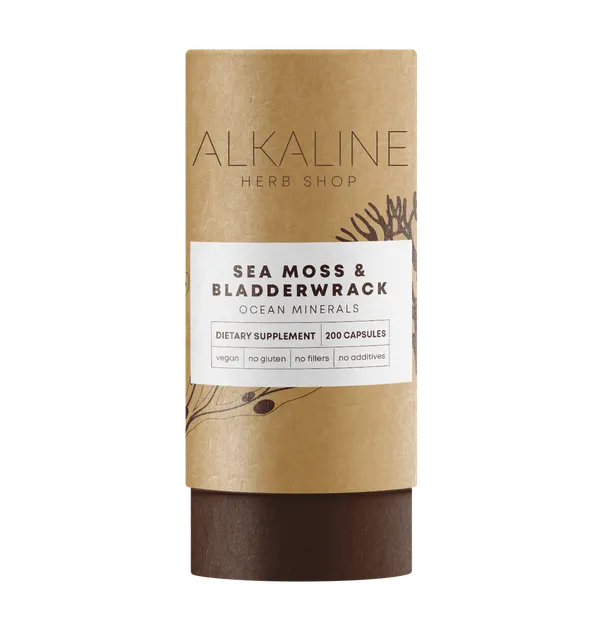
Sea Moss & Bladderwrack Supplement 200 Capsules
Capsules that pair Irish sea moss with bladderwrack, 900 mg of each in the three-capsule serving the retailer lists. High in iodine by the retailer's own numbers.
- Format: Capsules
- Size: 200 vegetable capsules
- Category: Sea Moss
- Price: $49.99 (checked November 3, 2026)
- Lab evidence: Merchant states third-party testing. CannaWize has not reviewed the results.
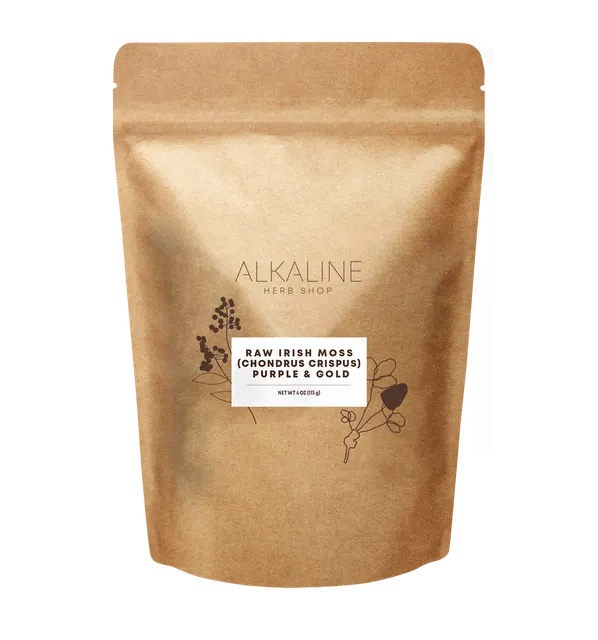
Raw Purple & Gold Sea Moss 4 oz (Chondrus Crispus, Irish Sea Moss)
Whole dried Chondrus crispus in a purple and gold mix. You rinse, soak and blend it into gel yourself. The retailer says this bag is from Canada.
- Format: Raw (dried) sea moss
- Size: 4 oz bag
- Category: Sea Moss
- Price: $29.99 (checked November 3, 2026)
- Lab evidence: Lab results not reviewed by CannaWize
Affiliate disclosure: CannaWize may earn a commission if you buy through links on this page, at no extra cost to you. CannaWize does not sell these products. You complete your purchase on the retailer's website, and the retailer handles pricing, shipping and returns.
Frequently asked questions
What is a Certificate of Analysis (COA)?
A COA is a laboratory or manufacturer document that reports test results for a specific lot. Under 21 CFR Part 111, a COA that a supplement manufacturer relies on must include the test methods, the limits of the tests and the actual results.
Does "third-party tested" mean a sea moss product is safe?
No. It means an outside lab analyzed a sample. LactMed notes that independent verification of a supplement does not certify its safety or effectiveness, and that labeled and actual ingredients often differ. Read the report for your lot.
Which heavy metals should a sea moss lab report list?
Lead, cadmium, mercury and arsenic. LactMed lists all four as possible contaminants in sea moss. A good report gives a measured value, a unit and a detection limit for each.
What is the difference between total and inorganic arsenic?
They are different measurements. A Korean survey of 426 dried seaweeds reported total arsenic, while a 2023 French assessment proposed limits for inorganic arsenic. Check which one a report gives before comparing numbers.
Should the lot number on the report match my bottle?
Yes. A report describes one lot on one date. If the lot, product name or test date does not match what you receive, the report tells you little about your product.
Sources and further reading
- NIH LactMed (Drugs and Lactation Database): Sea Moss
- NIH LactMed: Seaweed (kelp, bladderwrack)
- eCFR: 21 CFR Part 111, Current Good Manufacturing Practice for dietary supplements
- Hwang et al., 2010: Total arsenic, mercury, lead, and cadmium in edible dried seaweed in Korea
- Ficheux et al., 2023: Dietary exposure and risk assessment to trace elements and iodine in seaweeds
- NIH Office of Dietary Supplements: Iodine, health professional fact sheet
- USP: Dietary Supplements Verification Program
- Retailer lab results page: Sea Moss & Bladderwrack (Alkaline Herb Shop)
- Retailer product page: Sea Moss & Bladderwrack 200 capsules (Alkaline Herb Shop)