Open almost any dispensary or hemp shop menu and you will see terpenes listed next to THC: myrcene for relaxing, limonene for uplift, linalool for calm. Terpenes are real compounds that shape how cannabis smells and tastes, and scientists are studying whether they change its effects. But a 2024 review of the field concluded that terpenes boosting cannabinoids “remains unproven,” and a 2026 Johns Hopkins review called the human evidence “exceptionally limited.” This guide separates the chemistry from the marketing.
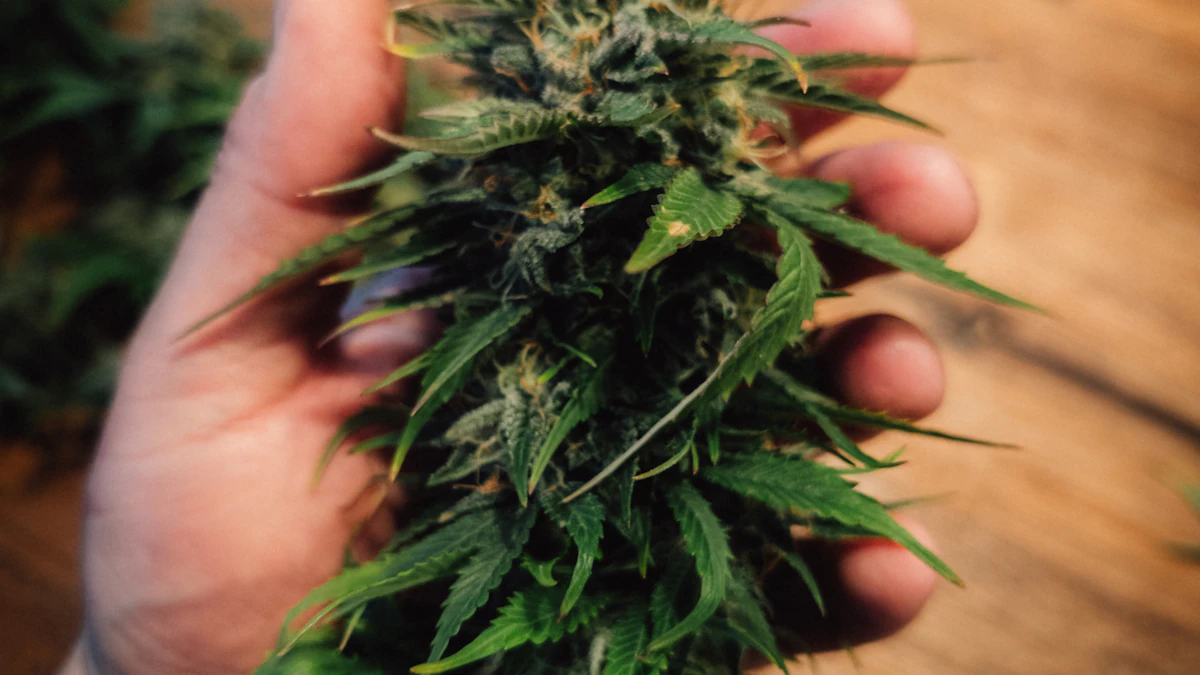
Terpenes drive cannabis aroma, and their levels are largely set by the plant’s genetics. Lab studies disagree on whether they act on cannabinoid receptors. Only a handful of controlled human studies exist. The best-known one found that a high dose of vaporized limonene reduced THC-induced anxiety in a small group of adults. A terpene list can tell you how a batch will smell. It cannot reliably tell you how you will feel.
What Terpenes Are
Terpenes are a huge family of aromatic compounds made by plants. They are why lemons smell like lemons, pine needles smell like pine, and lavender smells like lavender. Cannabis makes them in the same sticky glands, called trichomes, that produce THC and CBD. A 2019 review in Plant Science notes that cannabis resin contains “hundreds” of terpene and cannabinoid compounds, many not yet conclusively identified.
Strictly speaking, “terpenes” are the hydrocarbons and “terpenoids” are related compounds with oxygen added, such as linalool. Most product labels use “terpenes” for both, and so do we.
What Terpenes Clearly Do: Smell and Taste
The one effect nobody disputes is aroma. Terpenes are the main reason two cannabis products with the same THC level can smell like citrus, diesel, pepper or pine. Aroma matters to many consumers, and it is a reasonable thing to shop for. It is also a signal of freshness: terpenes are volatile, so poor storage, heat and age reduce them.
Strain Names and Indica/Sativa Labels Don’t Predict Terpenes Well
Two large studies tested what is actually inside commercial cannabis. A 2021 study in Nature Plants genotyped more than 100 samples and found that Sativa- and Indica-labelled samples were “genetically indistinct” across the genome. The labels did line up with a small number of terpenes, which are controlled by a cluster of terpene synthase genes. A 2022 PLOS ONE analysis of commercial samples from six U.S. states found real, repeatable chemical profiles, but concluded that commercial labels “do not consistently align” with them. The practical lesson: if you care about terpenes, read the batch lab report, not the strain name. Our indica vs. sativa myth explainer covers this in more detail.
Do Terpenes Change How Cannabis Feels? The Evidence Splits
The idea that terpenes and cannabinoids work together is called the entourage effect, popularized by a 2011 review by neurologist Ethan Russo. Researchers have tested it at several levels, and the results do not agree:
- At the cannabinoid receptors (lab dishes): A 2019 study tested six common terpenes, including myrcene, limonene, linalool and beta-caryophyllene. None activated human CB1 or CB2 receptors or changed THC’s signaling. A 2020 study reached the same conclusion, except for a possible weak interaction of beta-caryophyllene with CB2.
- In other lab and mouse work: A 2021 study in Scientific Reports reported that several terpenes, including linalool, produced cannabinoid-like behaviors in mice and activated CB1 in cell tests. Different methods produce different answers.
- In people: Controlled human studies are rare. The clearest one, from Johns Hopkins in 2024, is covered in our limonene guide.
Read the full breakdown in The Entourage Effect: What the Evidence Shows.
The Four Terpenes Menus Mention Most
| Terpene | What research actually shows | Human evidence? |
|---|---|---|
| Myrcene | Sedation and muscle relaxation in mice at high injected doses. Did not act on CB1 or CB2 in lab tests. | No controlled human cannabis trials found |
| Limonene | Inhaled with a high THC dose, the highest limonene dose reduced “anxious” and “paranoid” ratings. Alone, it did nothing measurable. | One small trial (20 adults) |
| Beta-caryophyllene | Binds and activates the CB2 receptor. Reduced inflammation and pain in mouse models. Not intoxicating. | No controlled human cannabis trials found |
| Linalool | Its smell reduced anxiety-like behavior in mice; the effect vanished in mice that could not smell. | No controlled human cannabis trials found |
“No controlled human cannabis trials found” means we found no published controlled trial testing that terpene as part of cannabis in people as of November 2026. It does not mean the terpene does nothing.
How to Read Terpenes on a Lab Report
Many certificates of analysis (COAs) include a terpene panel. Here is how to read it without over-reading it:
- Check that it’s the same batch. The batch or lot number on the COA should match the package. Terpenes vary from batch to batch even under the same strain name.
- Look at units. Results are usually given as a percentage of weight or in milligrams per gram (1% equals 10 mg/g). Compare like with like.
- Look at total terpenes, then the top few. The ranking tells you what will dominate the aroma. A long list of compounds near the detection limit adds little.
- “ND” or “<LOQ” means not detected or below the level the lab can reliably measure.
- Check the test date. Terpenes evaporate and break down over time, so an old report may overstate what is in the jar today.
- Not every COA tests terpenes. A missing terpene panel is not a safety problem; potency and contaminant results matter more. Our THCA lab report guide walks through those sections.
Using Terpene Information Sensibly
- Use terpenes to choose flavor and aroma, which they reliably affect.
- Treat effect claims (“sleepy,” “focused”) as marketing unless a human study backs them.
- THC dose, route, tolerance, food and setting have far better evidence for shaping your experience. Our THC dose-response explainer shows how much dose matters.
- If you keep notes, record the terpene panel along with dose and how you felt. Your own pattern is more useful than a menu chart.
- Don’t rely on any terpene to make cannabis safe for driving or work.
Clear answers
Frequently Asked Questions
What Are Cannabis Terpenes?
Terpenes are aromatic compounds made by many plants. In cannabis they are produced in the trichomes, along with cannabinoids, and they are the main reason different products smell like citrus, pine, pepper or diesel.
Do Terpenes Get You High?
No. The common cannabis terpenes are not intoxicating on their own. In a 2024 Johns Hopkins trial, vaporized limonene given alone produced no effects that differed from placebo.
Do Terpenes Change the Effects of THC?
Possibly, but the evidence is thin. Lab studies disagree, and only a few controlled human studies exist. One found that a high dose of vaporized limonene reduced THC-induced anxiety and paranoia ratings in a small group of adults.
Can a Strain Name Tell Me Its Terpenes?
Not reliably. Studies in Nature Plants (2021) and PLOS ONE (2022) found that strain names and indica/sativa labels track chemistry poorly. A batch-specific lab report is the better source.
Where Do I Find a Product’s Terpenes?
Look for a terpene panel on the batch’s certificate of analysis. Match the batch number, check the test date and compare results in the same units.
Sources
- Booth JK, Bohlmann J, “Terpenes in Cannabis sativa – From plant genome to humans,” Plant Science, 2019
- Watts S et al., “Cannabis labelling is associated with genetic variation in terpene synthase genes,” Nature Plants, 2021
- Smith CJ et al., “The phytochemical diversity of commercial Cannabis in the United States,” PLOS ONE, 2022
- Russo EB, “Taming THC: potential cannabis synergy and phytocannabinoid-terpenoid entourage effects,” British Journal of Pharmacology, 2011
- Santiago M et al., “Absence of Entourage: Terpenoids Commonly Found in Cannabis sativa Do Not Modulate the Functional Activity of Δ9-THC at Human CB1 and CB2 Receptors,” Cannabis and Cannabinoid Research, 2019
- Finlay DB et al., “Terpenoids From Cannabis Do Not Mediate an Entourage Effect by Acting at Cannabinoid Receptors,” Frontiers in Pharmacology, 2020
- LaVigne JE et al., “Cannabis sativa terpenes are cannabimimetic and selectively enhance cannabinoid activity,” Scientific Reports, 2021
- Spindle TR et al., “Vaporized D-limonene selectively mitigates the acute anxiogenic effects of Δ9-tetrahydrocannabinol in healthy adults who intermittently use cannabis,” Drug and Alcohol Dependence, 2024
- André R et al., “The Entourage Effect in Cannabis Medicinal Products: A Comprehensive Review,” Pharmaceuticals, 2024
- Elder HJ et al., “A Critical Review of the Interactions Between Δ9-THC and Other Naturally Occurring Phytochemical Constituents of Cannabis sativa,” Current Neuropharmacology, 2026 (online ahead of print)