Nearly every statewide office on the Nov. 3 ballot has power over cannabis policy in Texas, and nearly every candidate who has held office has a record on it. What voters hear, though, is usually shorthand: the governor "saved hemp," a candidate "supports medical marijuana," a lawmaker "voted for SB 3." Some of that shorthand is accurate. Some of it is close to the opposite of the record. For this guide we went to the official bill history, the House and Senate journals, the governor's own veto proclamation and executive order, state agency filings and congressional roll calls, so you can check every claim yourself.
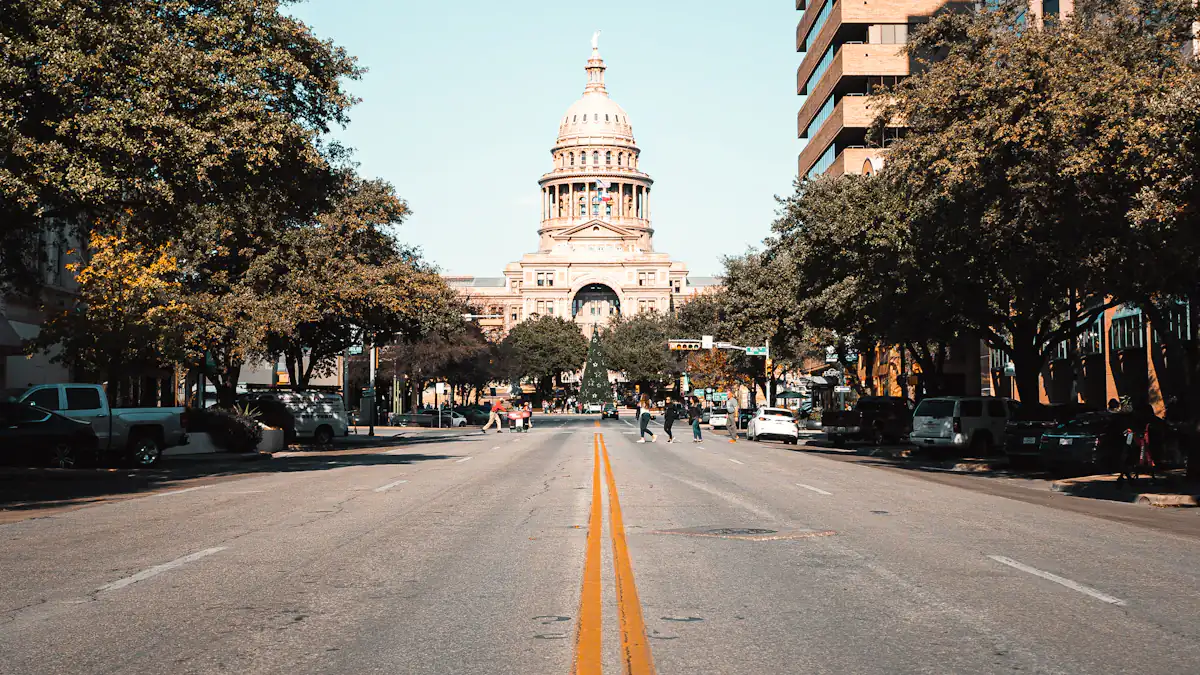
- Early voting: Oct. 19–30. Election Day: Tuesday, Nov. 3. The registration deadline was Oct. 5; check your status and polling place at VoteTexas.gov.
- Primaries are over. The March 3 primary and May 26 runoff set these matchups. This guide covers the general election.
- Why it matters now: Sen. Charles Perry, who wrote the 2025 ban, says he will file a new THC ban when the Legislature convenes in January 2027. A federal redefinition of hemp takes effect Dec. 11, 2026.
The Short Version
Judged only on cannabis, the statewide records point one direction this year. The table below is a summary; each race has a full record card further down with links to the underlying votes and documents.
| Office | Republican | Democrat | Stronger record for pro-cannabis voters |
|---|---|---|---|
| Governor | Greg Abbott (incumbent) | Gina Hinojosa | Hinojosa. Voted no on SB 3 at every passage stage. Abbott vetoed SB 3 on legal grounds, then ordered the THCA-counting rule that took most THCA flower off legal shelves. |
| Lieutenant governor | Dan Patrick (incumbent) | Vikki Goodwin | Goodwin. Patrick made a total THC ban a top priority and still supports one. Goodwin voted against the ban and campaigns on regulation. |
| Attorney general | Mayes Middleton | Nathan Johnson | Johnson, with a caveat. Middleton voted for the ban at every step. Johnson voted yes in March 2025 but no on the final vote, and filed decriminalization and regulation bills. |
| U.S. Senate | Ken Paxton | James Talarico | Talarico. He voted no on SB 3 and filed a legalization bill. Paxton's office sued cities over decriminalization and defends the THCA rules in court. |
| Agriculture commissioner | Nate Sheets | Clayton Tucker | Tucker. He backs hemp farming and adult consumption. Sheets has blamed the state hemp program for the spread of THC shops. |
| Comptroller | Don Huffines (appointed incumbent) | Sarah Eckhardt | Eckhardt. She offered the Senate amendment to replace the ban with regulation. We found no public cannabis position from Huffines. |
The statewide split above follows party lines, but the legislative record does not. Seven House Democrats were recorded voting for SB 3 on final passage and two House Republicans voted against it. In the Senate, five Democrats voted to send the ban to the governor. That is why the House lookup table and Senate table below list individual votes.
How We Built This Guide
Scope. This is a single-issue guide. It covers hemp-derived THC, THCA, marijuana penalties, the medical program and local enforcement. It is not a judgment on any candidate's record on taxes, schools, the border or anything else, and most voters weigh many issues.
What we mean by "pro-cannabis." We looked for four things: opposing a ban on hemp-derived THC for adults 21 and older while supporting age limits, testing and labeling; supporting lower or no criminal penalties for small amounts of marijuana; supporting broader medical access; and respecting voter-approved local enforcement priorities.
Evidence, ranked. Recorded floor votes and official acts count most. Bills a candidate filed come next, then public statements, then campaign websites and advocacy-group surveys. Every vote cited here links to the official House or Senate journal, and every executive action links to the signed document.
How to read a roll call. A bill usually gets several recorded votes: amendments, second reading and final passage. A "yes" on an amendment that lowers a penalty is not a "yes" on the bill. We label each vote by what it actually decided, which turns out to matter a great deal (see pattern three).
How Texas Got Here
- June 10, 2019: Abbott signs HB 1325, legalizing hemp and hemp products under 0.3% delta-9 THC.
- March 19, 2025: The Senate passes Perry's SB 3, 26-5. It bans any hemp product containing a cannabinoid other than CBD or CBG.
- May 21–22, 2025: The House replaces its own licensing-and-tax version with the ban, 86-53, then passes SB 3, 87-54.
- May 25, 2025: The Senate accepts the House changes, 25-6, and sends the ban to the governor.
- June 20, 2025: Abbott signs HB 46, expanding the medical Compassionate Use Program.
- June 22, 2025: Abbott vetoes SB 3 minutes before the deadline and calls a special session.
- July–September 2025: The Senate passes the ban twice more (SB 5, 21-8; SB 6, 22-8). The House never votes on either, and both sessions end without a hemp law.
- Sept. 10, 2025: Abbott issues Executive Order GA-56, ordering 21-and-older sales, THCA-inclusive testing and a fee overhaul.
- Nov. 12, 2025: The bill ending the federal shutdown redefines hemp nationally, effective in one year.
- March 3 and May 26, 2026: Primaries. Sheets ousts Agriculture Commissioner Sid Miller; Paxton beats Sen. John Cornyn in the runoff; Middleton wins the attorney general runoff.
- March 31, 2026: DSHS rules take effect, counting THCA toward the 0.3% limit and raising retail fees to $5,000 per location.
- May 1, 2026: The Texas Supreme Court rules in DSHS v. Sky Marketing that the state may treat manufactured delta-8 THC as a controlled substance.
- June 5, 2026: The Fifteenth Court of Appeals lifts an injunction, letting the DSHS rules be enforced while the industry's appeal continues.
- July 31, 2026: Restored controlled-substance definitions covering delta-8 and similar THC isomers take effect.
- Sept. 2, 2026: Congress's one-month delay becomes law, moving the federal hemp deadline to Dec. 11.
- Dec. 8, 2026: Oral argument in the hemp industry's challenge to the DSHS rules.
- Jan. 12, 2027: The 90th Legislature convenes.
Not What It Looks Like: Six Patterns to Watch
The most useful thing a voter can know about cannabis politics in Texas is that headlines and records often diverge. These six patterns account for most of the confusion.
1. A veto is not an endorsement
Gov. Greg Abbott's veto of SB 3 is the most cited pro-hemp act in Texas politics, and it did keep low-dose delta-9 edibles and drinks legal. But the veto's reasoning and what followed tell a different story than "Abbott saved hemp."
What the veto actually argued. The four-page proclamation opens by saying Texas "must strongly regulate hemp," then calls the ban "well-intentioned." Its objection is legal durability. Abbott wrote that SB 3 would be tied up in court for years, citing a 2023 federal decision that had blocked a similar Arkansas law, a possible federal preemption conflict, a possible unconstitutional taking and a lawsuit filed two days earlier. The proclamation does mention farmers, veterans treating PTSD and Texans who invested in hemp stores. Each one appears as an example of legal exposure, though: farmers facing "criminal entrapment" under conflicting state and federal law, and store owners whose investments could support a takings claim. The document then lists the regulations Abbott wanted, including per-product THC caps, purchase limits, sales only between 10 a.m. and 9 p.m., no Sunday sales and a local option to ban stores outright.
The legal premise weakened within days. Two days after the veto, a federal appeals court upheld the Arkansas ban the proclamation relied on. Abbott responded that the Arkansas law differed from SB 3 in important ways.
What he said next. On July 22, 2025, a month after the veto, Abbott told Community Impact that "the only hemp product that's going to be out there is nonintoxicating hemp," which he described as no more than about 3 milligrams of THC.
What he ordered. When lawmakers failed to pass anything, Abbott's Executive Order GA-56 did more than set a 21-and-older age limit. Directive 2(a) told the Department of State Health Services to revise testing so it accounts for "the conversion of tetrahydrocannabinolic acid (THCA)." Directive 2(b) told it to revise manufacturer and retailer fees to reflect the state's full regulatory and enforcement costs. The order's preamble also held up a House plan, HB 309, as a model. Among other things, that plan would have prohibited the retail sale of hemp flower.
What that produced. The DSHS rules that took effect March 31, 2026 count THCA toward the 0.3% limit. In a July 2026 presentation to state senators, DSHS said it is enforcing THCA inclusion and described its total-THC definition as adopted "per GA-56." Retail registration rose from about $150 to $5,000 per location and manufacturer licenses from about $250 to $10,000, KUT reported. The same DSHS presentation said the program has seven inspectors and that 23 more would cost about $3.6 million a year. If every one of the 14,170 retail locations DSHS counted in June renewed at the new rate, retail fees alone would bring in about $70.9 million. That is a ceiling, since many stores may not renew, and the presentation does not explain how the new fee levels were calculated.
Who defends it in court. Attorney General Ken Paxton's office represents the state. "The current rule provided clarity," a lawyer from the attorney general's office told a Travis County judge in April, according to KUT. The appeal is set for oral argument Dec. 8.
Abbott deserves credit for the veto, for signing the 2019 hemp law and for the HB 46 medical expansion. But the record does not support calling him pro-cannabis. His stated goal was a non-intoxicating market, and his own order produced the rule that removed most THCA flower from legal Texas shelves. The Texas Hemp Business Council's 2026 voter guide rates Abbott "aligned" on the strength of the veto. We read the full record differently, and we think voters should see all of it.
For how the THCA formula works in practice, see our explainer Is THCA Still Legal in Texas?
2. "Supports medical marijuana" can travel with a hemp ban
The same senator carried both the 2025 ban and the 2025 medical expansion through the Senate: Charles Perry sponsored HB 46 and wrote SB 3. Abbott signed HB 46 on June 20 and vetoed SB 3 two days later. Lt. Gov. Dan Patrick made the connection explicit the morning after the veto. "The TCUP program, he signed that bill, that's worthless now," he said, according to Fox 7, arguing patients would simply buy from smoke shops instead.
In other words, the medical expansion was designed to sit next to a ban, not in place of one. Even expanded, the Texas Compassionate Use Program requires a registered physician, caps doses at 10 milligrams of THC, bars smokable flower and allows only 15 licensed dispensing organizations statewide, according to the Department of Public Safety and the Marijuana Policy Project. Hemp retailers who sued the state this summer alleged that the crackdown protects those licensees; that is the plaintiffs' claim, not a court finding. When a candidate says they support medical marijuana, ask what they would do about adult access outside the program. We cover that tension in more depth in Texas Medical Access Grows While Hemp Businesses Fight Restrictive Rules.
3. Amendment votes are not passage votes
Several online voter guides list gubernatorial nominee Gina Hinojosa as having voted for SB 3. The House Journal for May 22, 2025 shows she voted no on final passage (Record 3304), and the May 21 journal shows she voted no on the amendment that converted the House bill into a ban (Record 3191) and no on second reading (Record 3192).
The likely source of the error: minutes before final passage, the House voted 108-30 on an amendment by Rep. Joe Moody that lowered the bill's possession penalty to a Class C misdemeanor (Record 3303). Many ban opponents, including Hinojosa and James Talarico, voted yes on that amendment because it reduced the penalty. Read in isolation, it can look like a vote for the bill. It was not. When you check a lawmaker's record, look for the line in the journal that says the bill "was passed by (Record ####)."
4. A vote or a reputation can mean something else
Attorney general nominee Nathan Johnson voted yes when the Senate first passed SB 3 in March 2025. In a statement printed in the Senate Journal, he wrote: "I do not think that an outright ban is the right approach." He voted no when the final version came back in May and listed his decriminalization and medical bills. Both votes are part of his record.
Sid Miller, the outgoing agriculture commissioner, is widely seen as hemp's champion. In January 2025 he publicly backed Patrick's SB 3 push, calling the retail market a "wild west."
Federal votes are often bundled. The November 2025 hemp redefinition passed inside the bill that ended a 43-day government shutdown, so a yes on that bill says little about hemp specifically. Cleaner signals are the Senate's standalone procedural votes on hemp amendments, covered in the federal section.
5. "Regulation" can be a ban with better branding
SB 3's official caption described "the regulation of products derived from hemp." Its core provision banned any consumable hemp product containing a cannabinoid other than CBD or CBG. Age limits, lab testing, child-resistant packaging and labeling are regulation. A testing formula or fee level that disqualifies an entire product category works like a ban.
Here is the math under the DSHS rule, which calculates total THC as delta-9 THC plus 0.877 times THCA. A flower sample testing at 0.2% delta-9 THC and 20% THCA works out to about 17.7% total THC, nearly 60 times the 0.3% limit. Almost no conventional THCA flower can pass. When a candidate says they support "regulating" hemp, ask whether their version allows adults 21 and older to legally buy THCA flower and full-strength hemp THC products.
6. Silence is a position, too
Asked about the state's THC crackdown on the campaign trail in August, Paxton answered, "I don't know the details of it, but let's talk later," the San Antonio Current reported. As attorney general, his office litigates the state's hemp cases and sued six cities in 2024 over voter-approved marijuana ordinances. To be fair to the record, Paxton did not join the October 2025 or August 2026 letters in which dozens of state attorneys general urged Congress to keep the federal hemp ban on schedule. A candidate who will not state a position is asking voters to judge them on their actions.
Statewide Races
Each card covers what the office can do on cannabis, the candidates' records with links to the source, and our read for voters who rank cannabis policy high.
Governor: Greg Abbott (R) vs. Gina Hinojosa (D)
The governor signs or vetoes the 2027 hemp bill, appoints the leadership that oversees DSHS and can issue executive orders, as GA-56 showed.
Greg Abbott (R, incumbent)
- Signed the 2019 hemp law and the 2025 HB 46 medical expansion.
- Vetoed SB 3 on legal-durability grounds, calling it "well-intentioned."
- Said in July 2025 that only non-intoxicating hemp should be sold.
- Ordered THCA-inclusive testing and a fee overhaul in GA-56, which also required ID checks and a 21-and-older limit.
Gina Hinojosa (D)
- Voted no on the ban amendment, second reading and final passage of SB 3 (Records 3191, 3192, 3304).
- Voted for both House amendments lowering SB 3's possession penalties.
- Campaigns on letting Texans decide THC policy through a public vote, per the Texas Tribune. Texas has no statewide citizen initiative, so that would require legislative action.
- NORML's scorecard credits her with coauthoring medical-cannabis and decriminalization bills.
Also on the ballot: Pat Dixon (Libertarian), who told the Tribune that adults should be free to make their own choices so long as they do not harm others.
Pro-cannabis read: Hinojosa has the consistent anti-ban record. Abbott's record is a veto followed by a deliberate move toward a non-intoxicating market. A voter whose only goal is keeping low-dose delta-9 gummies legal may credit Abbott's veto. A voter who wants legal THCA flower and full adult access has a clearer match in Hinojosa.
Lieutenant Governor: Dan Patrick (R) vs. Vikki Goodwin (D)
The lieutenant governor controls the Senate's agenda and committee assignments. Every hemp ban that has passed the Senate since 2025 has been a Patrick priority.
Dan Patrick (R, incumbent)
- Named the THC ban one of his top priorities in 2025; the Senate passed versions of it four times in five months.
- After the special sessions failed, said "the Senate and I are for a total THC ban," per the Texas Tribune.
- Still supports banning THC products and has ordered further study of their health effects, according to Tribune and Texas Public Radio coverage this fall.
- House-passed bills reducing penalties for small amounts of marijuana have died in his Senate; he declared the 2019 version dead on arrival.
Vikki Goodwin (D)
- Voted no on the ban amendment and on second reading (Records 3191, 3192).
- Missed the final-passage roll call; she filed a statement in the journal that her vote failed to register and she would have voted no.
- Her campaign site calls for "a sensible regulatory framework for THC, rather than outright prohibition," with age limits, testing and labeling.
Also on the ballot: Anthony Cristo (Libertarian), who told the Tribune it is time to legalize marijuana, and Kevin McCormick (Green), who supports hemp production.
Pro-cannabis read: Goodwin. No other office on the ballot has had more direct influence over whether Texas bans hemp THC, and Patrick's position is not ambiguous.
Attorney General: Mayes Middleton (R) vs. Nathan Johnson (D)
The next attorney general will defend or reconsider the state's position in the hemp industry's appeal, which could reach the Texas Supreme Court in 2027, and will decide whether to sue cities like Houston over marijuana enforcement ordinances. Paxton is leaving the office to run for the U.S. Senate.
Mayes Middleton (R)
- Voted for SB 3 when the Senate passed it and when it accepted the House version (Senate Journal).
- Voted against Sen. Sarah Eckhardt's amendment to replace the ban with a 0.3% delta-9 standard.
- Listed as an author of SB 6, the second special-session ban.
- Voted for SB 1870, which would have created civil penalties for cities and counties over enforcement of drug and hemp laws.
Nathan Johnson (D)
- Voted yes on SB 3's first Senate passage in March 2025 while stating a ban was the wrong approach; voted no on final concurrence in May.
- Voted for Eckhardt's regulate-instead amendment and against SB 1870.
- Says in the journal that he filed SB 2028, to decriminalize possession and reduce marijuana penalties, and SB 928, to add chronic pain to the medical program.
- The Marijuana Policy Project also credits him with SB 53, a hemp regulation bill.
Pro-cannabis read: Johnson, clearly, with one honest caveat: his March vote helped move SB 3 out of the Senate. Middleton supported every version of the ban and the bill aimed at local enforcement policies.
U.S. Senate: Ken Paxton (R) vs. James Talarico (D)
Congress controls the federal definition of hemp that takes effect Dec. 11, the next farm bill, banking access and federal marijuana scheduling. Paxton beat Sen. John Cornyn in the May runoff.
Ken Paxton (R)
- As attorney general, sued Austin, San Marcos, Killeen, Denton and Elgin in 2024, and later Dallas, over voter-approved decriminalization; an appeals court sided with him on Austin and San Marcos in 2025.
- His office defends the DSHS THCA rules in court.
- Declined to give a position on the THC crackdown in August.
- Did not sign the 2025 or 2026 attorney general letters backing the federal hemp ban.
James Talarico (D)
- Voted no on the ban amendment, second reading and final passage of SB 3.
- Spoke against the bill during the House debate, calling the ban "a gift to the cartels," as Duane Morris's cannabis law blog reported.
- Filed HB 5307 in 2025 to legalize, regulate and tax cannabis and expunge some records.
- Supports federal legalization, according to the Marijuana Policy Project's guide, and has argued on the trail that hemp restrictions push buyers to the black market, per Marijuana Moment.
Also on the ballot: Ted Brown (Libertarian), who told the Marijuana Policy Project he favors full legalization. Context: the seat's current holder, Cornyn, voted both times to keep the federal ban on schedule; Sen. Ted Cruz voted the other way both times (see federal votes).
Pro-cannabis read: Talarico. He has voted against the ban and filed legalization. Paxton's record consists of enforcement actions against local decriminalization and defense of the THCA rules.
Agriculture Commissioner: Nate Sheets (R) vs. Clayton Tucker (D)
The Texas Department of Agriculture licenses hemp growers and runs pre-harvest testing. The commissioner is also the state's loudest official voice on farm policy.
Nate Sheets (R)
- Unseated Sid Miller in the March primary with Abbott's endorsement. Abbott's campaign cited Miller's "history of corruption," including his hiring of his former political consultant as the agency's chief of staff months after the consultant pleaded guilty to commercial bribery in a case involving the sale of hemp licenses, per the Texas Tribune. The endorsement was not framed around hemp policy.
- Told Big Country Homepage his concern is synthetic products such as delta-8 and delta-10, and blamed the way the state hemp program's rules were written for the spread of THC vape shops.
Clayton Tucker (D)
- His campaign platform says he fully supports every farmer's right to raise hemp and adults' right to consume hemp products.
- Also proposes using industrial hemp for fuel to lower diesel costs for farmers.
- No legislative record; positions are from his campaign.
Pro-cannabis read: Tucker, on stated positions. Neither candidate has held office, so this race is about platforms rather than votes.
Comptroller: Don Huffines (R) vs. Sarah Eckhardt (D)
The comptroller certifies revenue estimates and would collect any hemp or cannabis tax the Legislature creates. Huffines was appointed by Abbott in July after winning the primary.
Don Huffines (R)
- Has not held a legislative seat since 2019 and has no recorded vote on SB 3.
- We found no public statement from him on hemp or marijuana policy.
Sarah Eckhardt (D)
- Voted no on SB 3's Senate passage and final concurrence.
- Offered Floor Amendment 4, which would have replaced the ban with a 0.3% delta-9 standard, labeling and child-resistant packaging; it failed 8-23 (Senate Journal).
- Joined a statement objecting that SB 3 criminalized non-intoxicating hemp products.
Pro-cannabis read: Eckhardt, on the record. Huffines may support a regulated market; he simply has not said.
Texas Senate Races
Sixteen of the 31 Senate seats are on the ballot. Because the Senate has passed a ban four times since 2025, these races decide whether a fifth attempt clears the chamber easily. The votes below come from the March 19, 2025, April 23, 2025 and May 25, 2025 Senate Journals. Candidate lists are from Ballotpedia; confirm your own ballot before voting.
| District | Nov. 3 candidates | SB 3 Senate passage (Mar. 2025) | Eckhardt "regulate, don't ban" amendment | SB 3 final concurrence (May 2025) | SB 1870 local enforcement bill |
|---|---|---|---|---|---|
| 1 | Bryan Hughes (R, incumbent) vs. Laticia Ambroz (D) | Yes | No | Yes | Yes |
| 2 | Bob Hall (R, incumbent) vs. Keenen Colbert (D) | Yes | No | Yes | Yes |
| 3 | Open seat: Trent Ashby (R) vs. Bobby Tillman (D) | No Senate record. As a House member, Ashby voted yes on the ban amendment and on final passage. | |||
| 4 | Brett Ligon (R, incumbent) vs. Ron Angeletti (D) | Not in the Senate during the 2025 votes. | |||
| 5 | Charles Schwertner (R, incumbent, SB 3 coauthor) vs. Paul Thomasson (D) | Yes | No | Yes | Yes |
| 9 | Taylor Rehmet (D, incumbent) vs. Leigh Wambsganss (R) | Not in the Senate during the 2025 votes. | |||
| 11 | Open seat: Dennis Paul (R) vs. Shannon Dicely (D) | No Senate record. As a House member, Paul voted yes on the ban amendment and on final passage. | |||
| 13 | Borris Miles (D, incumbent), no Republican opponent | Yes | Yes | Yes | No |
| 18 | Lois Kolkhorst (R, incumbent) vs. Erica Gillum (D) | Yes | No | Yes | Yes |
| 19 | Roland Gutierrez (D, incumbent) vs. Marcus Cardenas (R) | Yes | Yes | Yes | No |
| 21 | Judith Zaffirini (D, incumbent) vs. Julie Dahlberg (R) | No | Yes | No | Yes |
| 22 | Open seat: David Cook (R) vs. Amy Martinez-Salas (D) | No Senate record. As a House member, Cook voted yes on the ban amendment and on final passage. | |||
| 24 | Pete Flores (R, incumbent) vs. Joe P. Herrera (D) | Yes | No | Yes | Yes |
| 26 | José Menéndez (D, incumbent) vs. Julian Villarreal (Green) | No | Yes | No | No |
| 28 | Charles Perry (R, incumbent, SB 3 author) vs. Riley Rodriquez (D) | Yes | No | Yes | Yes |
| 31 | Kevin Sparks (R, incumbent, SB 3 coauthor) vs. John Betancourt (D) | Yes | No | Yes | Yes |
Red marks the restrictive position on each vote and green the anti-ban position. On the Eckhardt amendment a yes supported replacing the ban with regulation, so a yes appears in green there. SB 1870 passed the Senate 23-8 but never got a House floor vote.
Several Democratic challengers, including Ambroz, Colbert, Tillman, Thomasson, Dicely and Herrera, told the Marijuana Policy Project's candidate survey that they support medical expansion and a legal cannabis market. Survey answers are promises, not records, so weigh them accordingly.
Texas House: Look Up Your Representative's SB 3 Vote
All 150 House seats are on the ballot. The table shows how every member voted on the two SB 3 roll calls that mattered most, taken from the official House Journals for May 21 and May 22, 2025:
- Ban amendment (Record 3191, passed 86-53): Rep. Tom Oliverson's amendment replaced the House committee's licensing-and-tax framework with the Senate-style ban. This is the cleanest "ban or regulate" vote in either chamber.
- Final passage (Record 3304, passed 87-54): the vote that sent the ban back to the Senate.
A few votes run against type. Rep. Ken King, the bill's House sponsor, voted against the ban amendment that replaced his own committee's regulatory version, then voted for final passage. Former Speaker Dade Phelan did the same. Don't know your district? Find it with the Legislature's Who Represents Me tool, then search the table by name or district number. Ballot information is from Ballotpedia; confirm your own sample ballot before voting.
| Dist. | Member (2025) | Ban amendment (3191) | Final passage (3304) | Nov. 3 status |
|---|---|---|---|---|
| 1 | Gary VanDeaver (R) | Yes | Yes | Not on Nov. 3 ballot for this seat; candidates: Sean Huffman (D), Chris Spencer (R) |
| 2 | Brent Money (R) | Yes | Yes | On ballot vs. Fatima Muse (D) |
| 3 | Cecil Bell Jr. (R) | Yes | Yes | Not on Nov. 3 ballot for this seat; candidates: Nicole King (D), Kristen Plaisance (R) |
| 4 | Keith Bell (R) | Yes | Yes | On ballot vs. Mark Moseley (D) |
| 5 | Cole Hefner (R) | Yes | Yes | On ballot vs. Hector Garza (D) |
| 6 | Daniel Alders (R) | Yes | Yes | On ballot vs. Lorenzo Johnson (D) |
| 7 | Jay Dean (R) | Yes | Yes | On ballot vs. Fantasha Allen (D) |
| 8 | Cody Harris (R) | Yes | Yes | On ballot vs. Jeff Chavez (D) |
| 9 | Trent Ashby (R) | Yes | Yes | Running for Texas Senate District 3; open House seat: Shelley Tatum (D), Rocky Thigpen (R) |
| 10 | Brian E. Harrison (R) | Present, not voting | No | On ballot vs. Michael Myers (D) |
| 11 | Joanne Shofner (R) | Yes | Yes | On ballot vs. Roxanne Lathan (D) |
| 12 | Trey Wharton (R) | Yes | Yes | On ballot vs. Andie Ho (D) |
| 13 | Angelia Orr (R) | Yes | Yes | On ballot vs. Albert Hunter (D) |
| 14 | Paul Dyson (R) | Yes | Yes | On ballot vs. Janet Dudding (D), Jeff Miller (L) |
| 15 | Steve Toth (R) | Yes | Yes | Not on Nov. 3 ballot for this seat; candidates: Moniqua' Scott (D), Brad Bailey (R), Jessi Cowart (L) |
| 16 | Will Metcalf (R) | Yes | Yes | On ballot vs. Bobbie Clayton (D) |
| 17 | Stan Gerdes (R) | Yes | Yes | On ballot vs. Mary Klenz (D) |
| 18 | Janis Holt (R) | Yes | Yes | On ballot vs. Valorie Barton (D) |
| 19 | Ellen Troxclair (R) | Yes | Yes | On ballot vs. Tom Luck (D) |
| 20 | Terry Wilson (R) | Yes | Yes | On ballot vs. Matthias-Jonah Early (D) |
| 21 | Dade Phelan (R) | No | Yes | Not on Nov. 3 ballot for this seat; candidates: Jacky Hernandez (D), Ray Callas (R) |
| 22 | Christian Manuel (D) | Yes | Yes | On ballot (unopposed by a major-party candidate) |
| 23 | Terri Leo-Wilson (R) | Yes | Yes | On ballot vs. Cheryl Clark (D) |
| 24 | Greg Bonnen (R) | Yes | Yes | On ballot vs. Frank Carr (D) |
| 25 | Cody Vasut (R) | Yes | Yes | On ballot vs. Mike Meadors (D) |
| 26 | Matt Morgan (R) | Absent | Yes | On ballot vs. Elizabeth Markowitz (D) |
| 27 | Ron Reynolds (D) | No | No | On ballot vs. Ibifrisolam Max-Alalibo (R) |
| 28 | Gary Gates (R) | Yes | Yes | On ballot vs. Sandy Ibanez (D) |
| 29 | Jeffrey Barry (R) | Yes | Yes | On ballot vs. Karen Reeder (D) |
| 30 | A.J. Louderback (R) | Yes | Yes | On ballot vs. Crystal Sedillo (D) |
| 31 | Ryan Guillen (R) | Absent | Yes | On ballot vs. JJ Dominguez (D) |
| 32 | Todd Hunter (R) | Yes | Yes | On ballot vs. Gabriel Marroquin (D) |
| 33 | Katrina Pierson (R) | Yes | AbsentFiled statement: would have voted yes | On ballot vs. Orlando Lopez (D) |
| 34 | Denise Villalobos (R) | Yes | Yes | On ballot vs. Stephanie Saenz (D) |
| 35 | Oscar Longoria (D) | No | No | On ballot vs. Oscar Rosa (R) |
| 36 | Sergio Munoz Jr. (D) | No | No | On ballot (unopposed by a major-party candidate) |
| 37 | Janie Lopez (R) | Yes | Yes | On ballot vs. Oziel Ochoa Jr. (D) |
| 38 | Erin Gamez (D) | No | No | On ballot vs. Laura Cisneros (R) |
| 39 | Armando Martinez (D) | YesRecorded yes; filed statement saying intended no | YesRecorded yes; filed statement saying intended no | On ballot (unopposed by a major-party candidate) |
| 40 | Terry Canales (D) | No | AbsentFiled statement: would have voted no | On ballot vs. Celeste Cabrera-Huff (R) |
| 41 | Robert Guerra (D) | Absent | No | Not on Nov. 3 ballot for this seat; candidates: Julio Salinas (D), Gary Groves (R) |
| 42 | Richard Raymond (D) | No | No | On ballot vs. Teresa Johnson-Hernandez (R) |
| 43 | J.M. Lozano (R) | AbsentFiled statement: would have voted yes | YesRecorded yes; filed statement saying intended no | On ballot vs. Jeffrey Jackson (D) |
| 44 | Alan Schoolcraft (R) | Yes | Yes | On ballot vs. Eric Norman (D) |
| 45 | Erin Zwiener (D) | No | No | On ballot vs. Tennyson Moreno (R) |
| 46 | Sheryl Cole (D) | No | No | On ballot (unopposed by a major-party candidate) |
| 47 | Vikki Goodwin (D) | No | AbsentFiled statement: would have voted no | Running for lieutenant governor; open House seat: Pooja Sethi (D), Jennifer Mushtaler (R) |
| 48 | Donna Howard (D) | No | No | On ballot vs. Anthony Gupta (R) |
| 49 | Gina Hinojosa (D) | No | No | Running for governor; open House seat: Montserrat Garibay (D), Arshia Papari (G) |
| 50 | James Talarico (D) | No | No | Running for U.S. Senate; open House seat: Samantha Lopez-Resendez (D), Howard Olsen IV (R) |
| 51 | Maria Luisa Flores (D) | No | No | On ballot vs. Jessica Martinez (R) |
| 52 | Caroline Harris Davila (R) | Yes | Yes | On ballot vs. Chris Jimenez (D) |
| 53 | Wesley Virdell (R) | Yes | Yes | On ballot vs. Kathryn Hartmann (D) |
| 54 | Brad Buckley (R) | Yes | Yes | On ballot vs. Dawn Richardson (D) |
| 55 | Hillary Hickland (R) | Yes | Yes | On ballot vs. Amelia Rabroker (D) |
| 56 | Pat Curry (R) | Yes | Yes | On ballot vs. Ashley Thornton (D) |
| 57 | Richard Hayes (R) | Yes | Yes | On ballot vs. Ray Stith (D), Darren Hamilton (L) |
| 58 | Helen Kerwin (R) | Yes | Yes | On ballot vs. Chris Oldham (D) |
| 59 | Shelby Slawson (R) | Yes | Yes | On ballot vs. Andrew Turner (D) |
| 60 | Mike Olcott (R) | Yes | Yes | On ballot vs. Krissy Guess (D) |
| 61 | Keresa Richardson (R) | Yes | Yes | On ballot vs. Brittany Black (D), Anissa Chilmeran (G) |
| 62 | Shelley Luther (R) | Yes | Yes | On ballot vs. Catherine Thorne (D) |
| 63 | Ben Bumgarner (R) | Yes | Yes | On ballot vs. H. Denise Wooten (D) |
| 64 | Andy Hopper (R) | Yes | Yes | On ballot vs. Julie Evans (D) |
| 65 | Mitch Little (R) | Yes | Yes | On ballot vs. Detrick Deburr (D) |
| 66 | Matt Shaheen (R) | Yes | Yes | On ballot vs. Sandeep Srivastava (D) |
| 67 | Jeff Leach (R) | Yes | Yes | On ballot vs. Jordan Wheatley (D) |
| 68 | David Spiller (R) | Yes | Yes | On ballot vs. Jasmine Henderson (D) |
| 69 | James Frank (R) | Yes | Yes | On ballot vs. Leilani Barnett (D) |
| 70 | Mihaela Plesa (D) | No | No | On ballot vs. George Flint (R) |
| 71 | Stan Lambert (R) | Yes | Yes | Not on Nov. 3 ballot for this seat; candidates: Diana Luna (D), Jay Hardaway (R) |
| 72 | Drew Darby (R) | Yes | Yes | On ballot vs. Shiloh Salazar (D) |
| 73 | Carrie Isaac (R) | No | Absent | On ballot vs. Merrie Fox (D) |
| 74 | Eddie Morales Jr. (D) | YesRecorded yes; filed statement saying intended no | No | On ballot vs. Robert Garza (R) |
| 75 | Mary Gonzalez (D) | No | No | On ballot (unopposed by a major-party candidate) |
| 76 | Suleman Lalani (D) | Yes | Yes | On ballot vs. Linda Howell (R) |
| 77 | Vincent Perez (D) | No | No | On ballot vs. Humberto Perez (R) |
| 78 | Joseph Moody (D) | No | No | On ballot (unopposed by a major-party candidate) |
| 79 | Claudia Ordaz (D) | Yes | Yes | On ballot vs. Jesse Romero (R) |
| 80 | Don McLaughlin (R) | Yes | Yes | On ballot vs. Cecilia Castellano (D) |
| 81 | Brooks Landgraf (R) | Yes | Yes | On ballot vs. Ceasar Sanchez (D) |
| 82 | Tom Craddick (R) | Yes | Yes | On ballot vs. Cathy Broadrick (D) |
| 83 | Dustin Burrows (R) | Presiding (did not vote) | Presiding (did not vote) | On ballot vs. Malik Williams (D) |
| 84 | Carl Tepper (R) | Yes | Yes | On ballot vs. Margaret Durham (D) |
| 85 | Stan Kitzman (R) | Yes | Yes | Not on Nov. 3 ballot for this seat; candidates: Lawrence Brandyburg (D), Dennis Geesaman (R) |
| 86 | John Smithee (R) | Yes | Absent | Not on Nov. 3 ballot for this seat; candidates: Cullin Knutson (D), Holly Jeffreys (R) |
| 87 | Caroline Fairly (R) | Yes | Yes | On ballot vs. Diana Loya (D) |
| 88 | Ken King (R) | No | Yes | On ballot vs. Heather Wallace (D) |
| 89 | Candy Noble (R) | Yes | Yes | On ballot vs. Angie Carraway (D) |
| 90 | Ramon Romero Jr. (D) | No | No | On ballot (unopposed by a major-party candidate) |
| 91 | David Lowe (R) | Yes | Yes | On ballot vs. Yisak Worku (D) |
| 92 | Salman Bhojani (D) | No | No | On ballot vs. JP Woodruff (R) |
| 93 | Nate Schatzline (R) | Yes | Yes | Not on Nov. 3 ballot for this seat; candidates: Ericka Lomick (D), Alan Blaylock (R) |
| 94 | Tony Tinderholt (R) | Yes | Yes | Not on Nov. 3 ballot for this seat; candidates: Katie O'Brien Duzan (D), Cheryl Bean (R) |
| 95 | Nicole Collier (D) | No | No | On ballot (unopposed by a major-party candidate) |
| 96 | David Cook (R) | Yes | Yes | Running for Texas Senate District 22; open House seat: Ebony Turner (D), Ellen Fleischmann (R) |
| 97 | John McQueeney (R) | Yes | Yes | On ballot vs. Beth Llewellyn McLaughlin (D) |
| 98 | Giovanni Capriglione (R) | Yes | Yes | Not on Nov. 3 ballot for this seat; candidates: Cate Brennan (D), Armin Mizani (R) |
| 99 | Charlie Geren (R) | Yes | AbsentFiled statement: would have voted yes | On ballot vs. Michelle Winder (D) |
| 100 | Venton Jones (D) | Absent | No | On ballot vs. Jordan Hoffnagle (R) |
| 101 | Chris Turner (D) | No | No | Not on Nov. 3 ballot for this seat; candidates: Junior Ezeonu (D) |
| 102 | Ana-Maria Rodríguez Ramos (D) | No | No | On ballot vs. Bonnie Abadie (R) |
| 103 | Rafael Anchia (D) | No | No | On ballot vs. Melanie Medley-Thomas (R) |
| 104 | Jessica Gonzalez (D) | No | No | On ballot (unopposed by a major-party candidate) |
| 105 | Terry Meza (D) | No | No | On ballot (unopposed by a major-party candidate) |
| 106 | Jared Patterson (R) | Yes | Yes | On ballot vs. Joe Mayes (D) |
| 107 | Linda Garcia (D) | No | No | On ballot (unopposed by a major-party candidate) |
| 108 | Morgan Meyer (R) | Yes | Yes | On ballot vs. Allison Mitchell (D) |
| 109 | Aicha Davis (D) | No | No | On ballot vs. Will Campbell (R) |
| 110 | Toni Rose (D) | No | No | On ballot (unopposed by a major-party candidate) |
| 111 | Yvonne Davis (D) | No | No | On ballot (unopposed by a major-party candidate) |
| 112 | Angie Chen Button (R) | Yes | Yes | On ballot vs. Zach Herbert (D) |
| 113 | Rhetta Andrews Bowers (D) | No | No | On ballot vs. Stephen Stanley (R) |
| 114 | John W. Bryant (D) | No | No | On ballot vs. Tim McDonough (R) |
| 115 | Cassandra Garcia Hernandez (D) | No | No | On ballot vs. Danny Rosellini (R) |
| 116 | Trey Martinez Fischer (D) | Yes | Yes | On ballot vs. Rhett Rosenquest Smith (R) |
| 117 | Philip Cortez (D) | No | Yes | On ballot vs. Ben Mostyn (R) |
| 118 | John Lujan (R) | Yes | Yes | Not on Nov. 3 ballot for this seat; candidates: Kristian Carranza (D), Jorge Borrego (R) |
| 119 | Elizabeth Campos (D) | AbsentFiled statement: would have voted no | No | On ballot vs. Melva Perez (R) |
| 120 | Barbara Gervin-Hawkins (D) | Absent | Absent | On ballot (unopposed by a major-party candidate) |
| 121 | Marc LaHood (R) | Yes | Absent | On ballot vs. Zack Dunn (D) |
| 122 | Mark Dorazio (R) | Yes | Yes | On ballot vs. Shelly Nickels (D) |
| 123 | Diego Bernal (D) | No | No | On ballot (unopposed by a major-party candidate) |
| 124 | Josey Garcia (D) | No | No | On ballot vs. Sylvia Soto (R) |
| 125 | Ray Lopez (D) | No | No | Not on Nov. 3 ballot for this seat; candidates: Adrian Reyna (D), Ricardo Martinez (R) |
| 126 | E. Sam Harless (R) | Yes | Yes | Not on Nov. 3 ballot for this seat; candidates: Stefanie Bord (D), Stan Stanart (R) |
| 127 | Charles Cunningham (R) | Yes | Yes | On ballot vs. Michelle Williams (D) |
| 128 | Briscoe Cain (R) | Yes | No | Not on Nov. 3 ballot for this seat; candidates: Desiree Klaus (D), Tom Butler (R) |
| 129 | Dennis Paul (R) | Yes | Yes | Running for Texas Senate District 11; open House seat: Albert Wittliff (D), Scott Bowen (R) |
| 130 | Tom Oliverson (R) | Yes | Yes | On ballot vs. Brett Robinson (D) |
| 131 | Alma Allen (D) | No | No | Not on Nov. 3 ballot for this seat; candidates: Staci Childs (D), Scott Whitmarsh (R) |
| 132 | Mike Schofield (R) | Yes | Yes | On ballot vs. Sara McGee (D) |
| 133 | Mano Deayala (R) | Yes | Yes | On ballot vs. Josh Wallenstein (D) |
| 134 | Ann Johnson (D) | No | No | On ballot vs. Mike Michna (R) |
| 135 | Jon Rosenthal (D) | No | No | Running for railroad commissioner; open House seat: Odus Evbagharu (D), Liz Ramos (R) |
| 136 | John Bucy III (D) | No | No | On ballot vs. Theodore Schramm (R) |
| 137 | Gene Wu (D) | No | No | On ballot vs. Helen Zhou (R) |
| 138 | Lacey Hull (R) | Yes | Yes | On ballot vs. Tyler Smith (D) |
| 139 | Charlene Ward Johnson (D) | No | Yes | On ballot vs. Kyle Harding (R) |
| 140 | Armando Walle (D) | No | No | On ballot vs. Laura Garcia DeLeon (R) |
| 141 | Senfronia Thompson (D) | No | No | On ballot vs. Julie Hunt (R) |
| 142 | Harold Dutton Jr. (D) | No | No | On ballot vs. Heidi Hall (R) |
| 143 | Ana Hernandez (D) | No | No | On ballot vs. Frank Salazar (R) |
| 144 | Mary Ann Perez (D) | AbsentFiled statement: would have voted yes | No | On ballot vs. David Flores (R) |
| 145 | Christina Morales (D) | No | No | On ballot vs. Inocensia Moreno (R) |
| 146 | Lauren Ashley Simmons (D) | No | No | On ballot vs. Alexandria Butler (R) |
| 147 | Jolanda Jones (D) | No | No | On ballot vs. Theodis Daniel (R) |
| 148 | Penny Morales Shaw (D) | Present, not voting | No | On ballot vs. Amanda LaBrie (R) |
| 149 | Hubert Vo (D) | No | No | Not on Nov. 3 ballot for this seat; candidates: Darlene Breaux (D), Dave Bennett (R) |
| 150 | Valoree Swanson (R) | Yes | Yes | On ballot vs. A'Yonna Kellum (D) |
Red marks a yes vote and green a no vote on these ban votes. "Filed statement" notes reflect statements of vote printed in the journal, which do not change the official tally. Party is the member's 2025 affiliation.
Local Ballot: Houston Proposition A
Houston voters will decide Proposition A, the citizen-initiated "Houston Freedom Act." It would amend the city charter to make enforcement of Class A and B misdemeanor marijuana possession the police department's lowest priority, ban no-knock warrants and require an audit of five years of marijuana arrests by demographics. Ground Game Texas gathered roughly 40,000 signatures to put it on the ballot, NORML reported.
It would not legalize marijuana or change state law. It also faces the same legal risk as earlier city measures: in 2025, the Fifteenth Court of Appeals sided with Paxton against similar ordinances in Austin and San Marcos. Whether the next attorney general sues Houston if Proposition A passes is one more reason the Middleton-Johnson race matters to cannabis voters. For how Harris County treats THC cases today, see our report on Harris County's enforcement priorities.
Courts and Congress
State courts. Four Texas Supreme Court seats and three Court of Criminal Appeals seats are on the ballot. The Supreme Court decided the delta-8 case in May and could be asked to review the THCA rules appeal next year. Judicial ethics rules bar judges and candidates from promising how they would rule, so we do not rate judicial candidates. Voters who want to evaluate them can read the Sky Marketing opinion and the candidates' published opinions.
The federal deadline. The national hemp redefinition, which counts THCA and caps finished products at 0.4 milligrams of total THC per container, now takes effect Dec. 11, 2026, after President Trump signed a one-month delay. Our explainer on why the federal delay doesn't change Texas rules covers how the two systems interact.
How Texas's senators voted. The cleanest federal hemp votes so far were two Senate motions to table, or kill, hemp amendments:
| Vote | What a "yes" meant | Cornyn (R) | Cruz (R) |
|---|---|---|---|
| Nov. 10, 2025: table Sen. Rand Paul's amendment to strip the hemp ban (passed 76-24) | Keep the ban in the bill | Yes | No |
| Aug. 8, 2026: table Sen. Ted Budd's amendment to remove the one-month delay (passed 61-32) | Keep the delay | NoVoted to keep the ban on its original schedule | YesVoted to keep the delay |
Red marks the pro-ban position on each vote and green the anti-ban position, which is why Cornyn's 2026 "no" appears in red.
In the House, every Texas Republican who voted, plus Democrat Henry Cuellar, supported the November 2025 package that carried the hemp redefinition, and the other Texas Democrats opposed it, according to Roll Call 285. Because that bill ended the shutdown, treat it as weak evidence about any member's hemp views.
What Texans Say
Polling on hemp depends heavily on wording, so here are the numbers alongside the questions:
- Asked in April 2025 about "outlawing the production and sale of cannabis-derived products in Texas, including consumable, hemp-based products," 50% of registered voters opposed and 34% supported, in the University of Texas/Texas Politics Project poll. Republicans were split, 46% support to 42% oppose.
- In June 2025, 53% opposed SB 3 itself and 31% supported it, the same pollsters found, as reported by the Texas Tribune. In the same survey, 54% supported adding more conditions to the medical program and 25% opposed.
- A January 2025 University of Houston Hobby School survey found 62% support for legal adult-use sales, 69% for decriminalizing personal possession and 79% for a full medical program. The same survey found 55% support for banning "currently unregulated" THC consumables. Framing a policy as fixing an unregulated market draws very different answers than framing it as outlawing products.
Questions to Ask Candidates
Vague answers are easy to give. These questions are designed to get specific ones, at a forum, on a call or by email:
- Will you vote against any bill that bans the sale of hemp-derived THC products to adults 21 and older?
- Should the state count THCA toward the 0.3% limit for retail sales, effectively ending legal THCA flower sales?
- Should a retail hemp registration cost $5,000 per location? What should the fee be based on?
- Should possessing a small amount of marijuana be a Class C misdemeanor, a civil fine or legal?
- Should voter-approved city enforcement priorities, like Houston's Proposition A, stand?
- Would you expand the medical program to allow flower and more licensed dispensaries?
- Would you support putting cannabis legalization before Texas voters as a constitutional amendment?
Then compare the answer with the record above. And before you go, read our plain-language guide to which hemp products the July 31 changes affected, so you know what is actually at stake on store shelves.
Clear answers
Frequently Asked Questions
Did Greg Abbott Protect the Texas Hemp Industry?
Partly. Abbott vetoed SB 3 in June 2025, which kept low-dose delta-9 hemp products legal. His veto rested on legal vulnerability, and a month later he said the only hemp products sold should be non-intoxicating. His September 2025 executive order directed the state health agency to count THCA toward the THC limit and to overhaul its fees, which led to rules that took most THCA flower off legal Texas retail shelves on March 31, 2026.
How Did Gina Hinojosa Vote on SB 3?
The official Texas House Journal shows Hinojosa voted no on the amendment that turned SB 3 into a ban (Record 3191), no on second reading (Record 3192) and no on final passage (Record 3304). Some online guides list her as a yes, apparently by reading an amendment vote as the passage vote.
Is THCA Flower Legal in Texas Right Now?
Retail sale of ordinary high-THCA flower is effectively blocked by state health department rules that count THCA toward the 0.3% THC limit, and those rules remain in effect while an appeal is pending. Whether simply possessing THCA flower is a crime is unsettled; police agencies have given conflicting answers. Talk to a Texas attorney about any specific situation.
When Does the Federal Hemp THC Ban Take Effect?
The federal redefinition of hemp that counts THCA and caps finished products at 0.4 milligrams of total THC per container is scheduled to take effect December 11, 2026, after Congress moved the date from November 12.
Can Texans Vote Directly on Marijuana Legalization?
Not statewide. Texas has no citizen initiative process for state law, so a statewide vote would require the Legislature to place a measure on the ballot. Some cities allow citizen-initiated ordinances; Houston voters will decide Proposition A, a marijuana enforcement-priority measure, on November 3, 2026.
Primary Sources and Reporting
- Texas Legislature Online: SB 3 (89R) bill history and record votes
- Texas House Journal, May 21, 2025 (Records 3188–3192)
- Texas House Journal, May 22, 2025 (Records 3303–3304 and statements of vote)
- Texas Senate Journal, March 19, 2025 (SB 3 passage, Floor Amendment 4, reasons for vote)
- Texas Senate Journal, April 23, 2025 (SB 1870)
- Texas Senate Journal, May 25, 2025 (SB 3 concurrence)
- Office of the Governor: SB 3 veto proclamation, June 22, 2025
- Office of the Governor: Executive Order GA-56, Sept. 10, 2025
- Texas DSHS: Consumable Hemp Program Updates to the Senate Health and Human Services Committee, July 2026
- Texas DSHS: Consumable Hemp Program
- Texas Legislature Online: HB 46 (89R) and HB 5307 (89R)
- SB 5 (89th, 1st called session) and SB 6 (89th, 2nd called session)
- Supreme Court of Texas: DSHS v. Sky Marketing Corp., No. 23-0887
- U.S. Senate Roll Call 614 (2025), Roll Call 227 (2026) and House Roll Call 285 (2025)
- Texas Hemp Business Council: Dec. 8 oral argument set in THBC v. DSHS
- Community Impact: Abbott says Texas must ban intoxicating THC products (July 22, 2025)
- Texas Tribune: Abbott vetoes THC ban, calls for regulation instead
- Texas Tribune: Your November 2026 sample ballot
- Marijuana Policy Project: 2026 Texas Voter Guide and Texas Hemp Business Council: 2026 Texas Hemp Voter Guide