The U.S. Senate early Saturday Voted to Table an Amendment that would have kept a federal ban on most hemp-derived THC products on schedule for November 12, clearing the way for a White House-backed provision that pushes the deadline to December 11 instead. The underlying government funding bill then Passed 90-6 and heads to the House, where lawmakers face their own decision on whether to keep the delay.
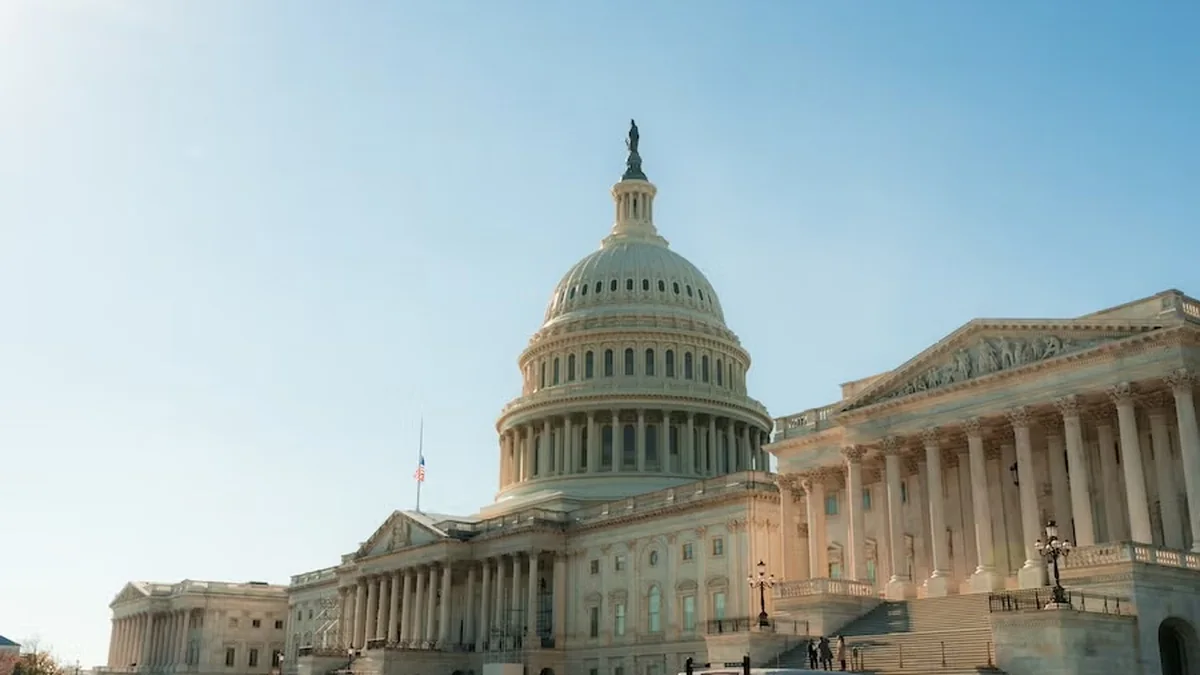
Senators voted 61-32 on a motion by Sen. Amy Klobuchar (D-Minn.) to table an amendment from Sen. Ted Budd (R-N.C.) and roughly a dozen cosponsors. Budd's amendment would have stripped language delaying the hemp THC ban out of the Senate's continuing resolution. With the amendment tabled, the delay language stayed in the bill, which then passed the full Senate 90-6.
The House is not expected to take up the Senate's version until it returns to session in September. The House passed its own continuing resolution in June with no hemp-delay language, so the two chambers still need to reconcile competing bills before December 11, when both the current stopgap funding and the proposed delay run out.
What the Vote Actually Changes
The fight was not over whether a federal hemp THC ban exists; it does, under language the president signed into law last year that redefines hemp for regulatory purposes. The fight was over its start date. The Senate's continuing resolution, which funds the federal government through December 11 and averts a shutdown at the end of the fiscal year, also delays enforcement of the new hemp rules to that same date rather than letting them take effect November 12 as originally scheduled.
Budd's amendment sought to remove that delay language so the November 12 date would hold. Klobuchar's motion to table effectively killed Budd's amendment without a direct up-or-down vote on its merits, and the Senate adopted that motion 61-32. Once the amendment was set aside, the full continuing resolution passed 90-6 with the delay intact, and it now goes to the House for consideration.
The Senators on Each Side
Budd argued the delay lets intoxicating hemp products stay on store shelves without adequate guardrails. On the Senate floor, he said the products are "hiding in plain sight" in convenience stores nationwide and called the situation "a public health crisis that deserves this Senate's immediate attention." He added: "Our children should never be the testing ground for an industry willing to exploit a loophole in federal law for profit. We need to strip this [language] from the continuing resolution and regulate these harmful substances for exactly what they are."
Sen. Tina Smith (D-Minn.), who worked with Klobuchar on the bipartisan delay language, framed the issue differently, pointing to her state's existing hemp regulatory system. "Adults should be allowed to have a THC beverage if they so choose," Smith said in a statement posted to her Senate website. "Minnesota has created one of the strongest, most carefully regulated systems in the country to allow the sale of hemp products. The initial ban set to take place was ill-advised and would have hurt both hemp farmers and Minnesota breweries alike." Smith said she and Klobuchar secured the bipartisan delay language but that a longer-term fix is still needed.
Industry and Advocacy Reaction
Hemp industry groups treated the vote as a reprieve rather than a resolution. The U.S. Hemp Roundtable, a trade association that has lobbied for hemp beverage and product makers, described passage of the continuing resolution as a major win for the industry and said it would keep pushing Congress toward a longer-term legislative fix, pointing to proposals like the Lawful Hemp Protection Act as a model for permanent testing, labeling, and age-verification standards. The Hemp Beverage Alliance, a trade group representing hemp drink makers, praised lawmakers for "standing up for responsible hemp beverage suppliers and their supply chain partners."
Groups on the other side of the debate, including some law enforcement associations and public-health advocates who back Budd's position, have argued that any delay leaves unregulated intoxicating products available to minors in the interim. CannaWize was unable to independently verify claims made by advocacy groups on either side and is reporting them as stated positions, not as established fact.
Background: How Federal Hemp Law Got Here
Hemp and its derivatives containing less than 0.3 percent delta-9 THC on a dry-weight basis were federally legalized under the 2018 Farm Bill, which the president signed during his first term. That law's definition did not directly address THCA, a non-intoxicating cannabinoid that converts to THC when heated, and a market of THCA flower, edibles, vapes, and beverages grew under that ambiguity in the years since.
Last year, the president signed new legislation that closes that gap by measuring hemp against total THC, including THCA, rather than delta-9 THC alone, and by capping finished products at 0.4 milligrams of total THC per container. Industry groups have said that standard would effectively eliminate most existing THCA flower and many hemp beverage products as currently formulated. CannaWize's earlier coverage explains the Federal Delay Proposal, the separate Texas Delta-8 Schedule, and how Texas paired Hemp Restrictions with Medical Cannabis Expansion. The delay language added to the continuing resolution was inserted at the White House's request, according to multiple outlets covering the negotiations, after the administration made addressing unintended consequences of the ban a stated priority.
What Happens Next
- The continuing resolution moves to the House, which is not expected to act until it returns to session in September; the House's own June continuing resolution had no hemp-delay language, so the chambers will need to reconcile competing bills before December 11.
- Absent further congressional action, the new hemp definition and container-content limits are scheduled to take effect December 11, 2026, for most products, while the synthetic-cannabinoid carve-out is scheduled for November 12.
- Hemp trade groups say they will keep pressing for a permanent statutory fix, rather than a recurring short-term delay, before the next funding deadline arrives.
- Retailers and manufacturers of THCA and hemp-derived THC products should treat December 11 as a compliance deadline, not a resolved issue, and should not assume Congress will extend it again.
Why the Wording Matters
It is inaccurate to describe this vote as Congress "legalizing" hemp THC products, and it is also inaccurate to describe it as the ban being cancelled. The Senate vote kept a delay in place; it did not repeal the underlying redefinition of hemp that the president signed into law, and it did not change the November 12 start date for the synthetic-cannabinoid provisions. Because House action and any final negotiated bill could still change these dates, readers making business, compliance, or purchasing decisions should confirm the current status with primary sources rather than relying on a single vote result.
Primary Sources
- Marijuana Moment: Senate Rejects Amendment To Keep Hemp THC Product Ban On Track For November
- The Hill: Senate Tables Hemp Amendment at Center of Funding Fight, Allowing One-Month Delay of Ban
- Forbes: Senate Moves To Delay Federal Ban On Hemp THC Products
- Sen. Tina Smith: Statement on Proposed Delay of National Ban on Hemp-Derived THC Products
- U.S. Hemp Roundtable: Nearly 100 Organizations Urge Senate to Preserve Hemp Ban Delay
- Cannabis Business Times: US Senate Plans to Delay Ban on Intoxicating Hemp Products
- Roll Call: Funding Patch Passes Senate to Head off Fall Shutdown