Cannabis cultivation has been reported in at least 155 countries that together account for about 96% of the world's population, according to the United Nations Office on Drugs and Crime. That makes cannabis one of the most geographically dispersed controlled crops tracked in the World Drug Report 2026.
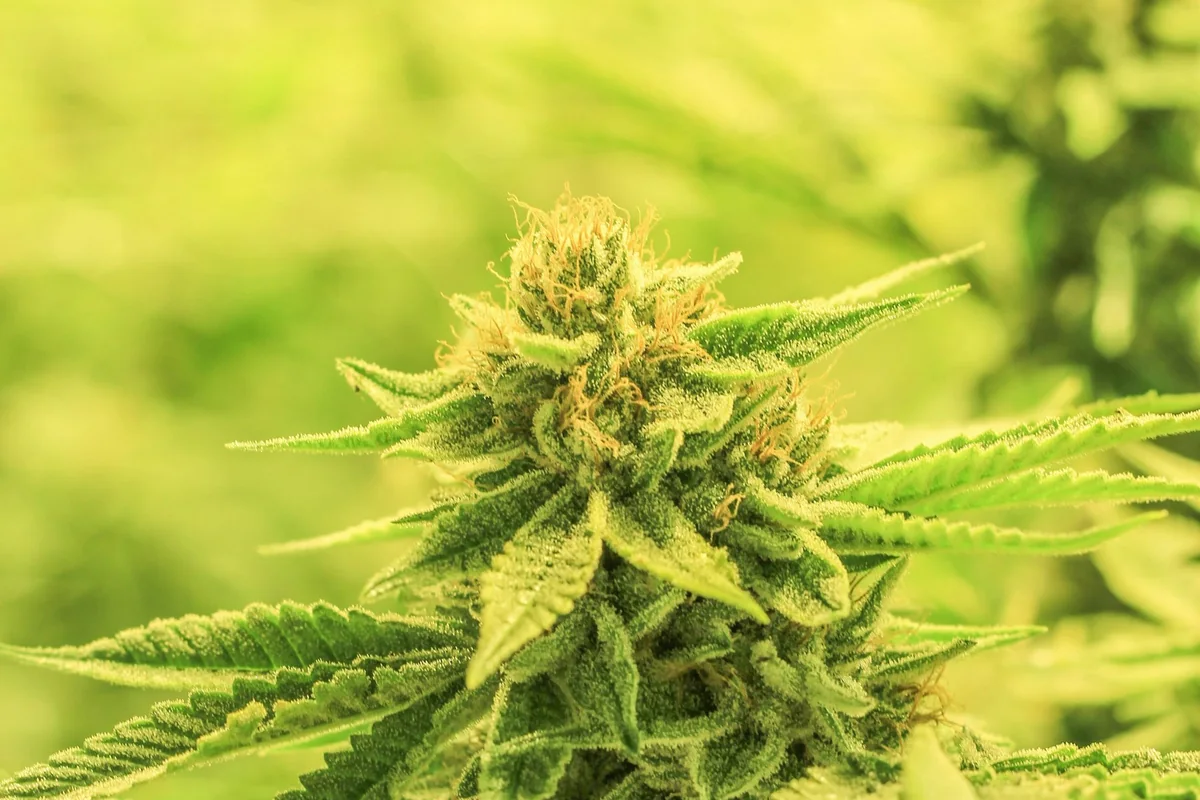
The UN figure concerns countries where cultivation has been reported. It is not a count of legal markets, a production ranking or proof that cannabis is grown at the same scale in each country.
What the 155-Country Figure Actually Measures
The UNODC World Drug Report 2026 Data Portal places the cultivation finding in its illicit crop section. The agency says reported cultivation reaches 155 countries covering approximately 96% of the global population. A country can appear in that count because authorities reported cultivation, even when the available data do not support a reliable national estimate of hectares, plants or finished product.
That distinction matters. Cannabis can be grown in a closet, a greenhouse, a field or an industrial facility. Detection varies with policing, reporting systems and whether a country has regulated medical, adult-use or hemp production. A broad country count captures reach more effectively than volume.
Why Cannabis Has Such a Wide Geographic Footprint
Cannabis adapts to many climates and can be cultivated indoors where outdoor conditions are poor. Unlike coca bush and opium poppy, production does not depend on a narrow set of agricultural regions. That makes cultivation easier to relocate and harder to estimate from satellite imagery alone.
Policy has also diversified the landscape. Some governments prohibit nearly all cannabis cultivation, while others license medical production, allow personal home growing or regulate adult-use markets. CannaWize's guide to the Divide Between Federal and State Cannabis Law shows how a single country can contain sharply different legal systems. The global picture is even less uniform.
What the Report Does Not Prove
The cultivation statistic should not be used as a proxy for use prevalence. A country may import much of what consumers use, export licensed medical products or grow cannabis that never reaches a measured retail market. The number also does not show that legalization caused the geographic spread. Cannabis cultivation was already global before many current regulatory systems existed.
The UN's separate 2026 Trends Portal combines more than 100 findings and hundreds of visualizations across drug use, supply, harms and policy. Those measures answer different questions. Production reach, past-year use, treatment demand, seizures and market value should not be collapsed into one claim about whether cannabis is becoming more common.
Why the Number Matters for Culture and Policy
A crop present across most of the inhabited world does not belong to one national story. Cannabis meanings are shaped by local history, medicine, prohibition, religion, music, migration and commerce. Our reporting on Cannabis in Music and Popular Culture examines one part of that normalization, while the UN figure shows how widely the underlying plant has traveled.
For policymakers, the number is a reminder that enforcement aimed only at foreign supply cannot fully control a crop that can be produced close to consumers. For regulated businesses, it signals that international opportunity comes with different licensing, product and treaty rules in every jurisdiction. For researchers, it shows why national surveys cannot be treated as a complete global census.
How to Read the World Drug Report Responsibly
The strongest use of the report is comparative. Readers can ask whether cultivation, seizures or use changed over time within a consistent data series, then check how the agency defines the measure. The weakest use is to extract one large number and attach a conclusion the underlying data do not support.
UNODC also depends on information supplied by governments, and reporting quality varies. Countries with stronger detection and statistical systems may appear more visible than places where production is poorly measured. The 155-country figure is best understood as evidence of minimum geographic reach, not a precise census of every growing operation.
That still makes the finding significant. Cannabis is not a crop confined to a few export zones. It is cultivated across an unusually wide range of places and regulatory systems, which helps explain why Research, public health and policy debates increasingly cross national borders.