Chamomile, lavender and ashwagandha each have some human research, and none is a proven sleep aid. NCCIH says chamomile has no conclusive evidence for insomnia, an oral lavender oil product might help anxiety, and some ashwagandha preparations may help insomnia and stress. Each carries safety flags, so check labels and ask a pharmacist if you take medicines.
Chamomile, lavender and ashwagandha are three botanicals that are commonly marketed for winding down. Each has some human research behind it. None has been shown to treat insomnia or an anxiety disorder, and each comes with safety notes that the front of a package rarely mentions. This guide sticks to what the National Center for Complementary and Integrative Health (NCCIH) and published reviews say, and it says where they stop.
What "herbs for sleep" can and cannot mean
Insomnia and anxiety disorders are medical conditions, and a dietary supplement cannot be sold as a treatment for either one. As we explain in our supplement buying guide, labels may describe an ingredient's effect on the body's structure or function, but they must also say the FDA has not evaluated the claim. A label that promises to treat insomnia is making a disease claim, which supplements are not allowed to make.
NCCIH's sleep page adds a blunt reminder: "natural" does not always mean safe. It also notes that terms like "standardized" do not guarantee quality or consistency.
Poor sleep has many causes, including pain, breathing problems such as sleep apnea, mood and medicines. A herb that makes you feel calm will not address those. Our review of cannabis and sleep makes the same point about cannabis products: feeling sleepy is not the same as treating a sleep disorder. Persistent sleep trouble, loud snoring, witnessed breathing pauses or dangerous daytime sleepiness are reasons to see a clinician rather than to try another supplement.
At a glance
| Botanical | What the sources say | Main safety flags |
|---|---|---|
| Chamomile | NCCIH says there is very little information on chamomile for insomnia. A 2019 meta-analysis of 12 trials found better sleep-quality scores, but the one trial that measured insomnia severity found no change. | Allergic reactions, especially if you react to ragweed or daisy-family plants. Reported interactions with warfarin and some liver-processed drugs. Pregnancy safety unknown. |
| Lavender | NCCIH says an oral lavender oil product might help anxiety, based on small studies. It is unclear whether lavender aromatherapy helps anxiety or sleep quality. | Digestive upset or headache with oral products, skin reactions with topical ones, and theoretical interactions with sedatives. Pregnancy safety poorly understood. |
| Ashwagandha | NCCIH says some preparations may be effective for insomnia and stress. A 2021 meta-analysis of five trials found a small but statistically significant improvement in sleep. | Avoid in pregnancy and breastfeeding. Not recommended with thyroid or autoimmune disorders. Rare liver injury cases. May interact with several medicines. |
Chamomile
NCCIH reports that there is very little information on chamomile's effect on insomnia, and its sleep page says there is no conclusive evidence from clinical trials showing whether chamomile helps. For anxiety, NCCIH describes preliminary studies suggesting a chamomile dietary supplement might help generalized anxiety disorder.
A 2019 systematic review and meta-analysis in Phytotherapy Research pooled 12 randomized trials. Chamomile was associated with better sleep-quality scores. In people with generalized anxiety disorder, anxiety ratings improved at 2 and 4 weeks, by about 1.4 and 1.8 points on the Hamilton scale, which runs to 56. Three pooled trials of state anxiety found no difference, and the only trial that measured insomnia severity found no significant change. The authors called for larger trials.
Two cautions follow from that. First, a sleep-quality score is a self-rated measure, and a better score is not the same as treating insomnia. Second, we did not find a tested amount for a cup of chamomile tea in the sources we reviewed, so we cannot call any number of tea bags a studied dose.
Safety. NCCIH says side effects are uncommon but include allergic reactions, which can be severe, and that people allergic to related plants such as ragweed, chrysanthemums, marigolds or daisies are more likely to react. It reports interactions with warfarin and with some drugs processed by the liver, and says that in theory chamomile might interact with sedatives. Little is known about chamomile during pregnancy or breastfeeding.
Lavender
The finding with the most support in NCCIH's summary is narrow: a lavender oil product taken by mouth might be beneficial for anxiety. NCCIH adds that the studies were small and that the research lacked independent funding and testing. That statement is about an oral lavender oil product. It does not show that lavender tea, a pillow spray or a diffuser does the same thing.
For aromatherapy, NCCIH says it is unclear whether lavender helps anxiety, and lists sleep quality or insomnia among the areas where benefit is unclear. Its sleep page says one review suggested aromatherapy may improve sleep quality, and that larger and more rigorous studies are needed.
Safety. Lavender in food amounts is likely safe, according to NCCIH. Oral products might be safe in the short term at the amounts tested, and some people get diarrhea, headache, nausea or burping. Aromatherapy is considered possibly safe but may cause headache or coughing. Topical products can cause allergic skin reactions, and swelling of breast tissue was reported in a few children, though the cause is unclear. NCCIH gives theoretical reasons that lavender might interact with some sedative drugs or herbs, which matters before surgery. Safety in pregnancy and breastfeeding is poorly understood.
Ashwagandha
Ashwagandha (Withania somnifera) is the one of the three that NCCIH says may be effective for insomnia, and it also carries the longest list of safety flags. NCCIH says research shows some preparations may be effective for insomnia and stress, that evidence for anxiety is unclear, and that many of the studies are small and use different preparations.
A 2021 systematic review and meta-analysis in PLoS ONE pooled five randomized trials of ashwagandha extract against placebo, with 400 adults. It found a small but statistically significant improvement in overall sleep. The effect looked larger in adults with insomnia, at doses of 600 mg a day or more, and with treatment lasting 8 weeks or longer. The reviewers found no serious side effects but said data on serious adverse effects are limited and that more safety evidence is needed before long-term use can be judged. Those subgroup patterns are leads for future research. They are not a recommended dose.
Safety. NCCIH says liver injury is rare, but there have been a number of cases linked to ashwagandha supplements. It advises avoiding ashwagandha in pregnancy and while breastfeeding, and says it is not recommended for people with autoimmune or thyroid disorders. NCCIH lists possible interactions with medicines for diabetes and high blood pressure, immunosuppressants, sedatives, anti-seizure medicines and thyroid hormone medicines. It says ashwagandha may be safe for up to 3 months and that there is not enough information about long-term safety.
Other names you will see on "sleep" labels
- Valerian. NCCIH says clinical trials have had inconsistent results and valerian's value for insomnia has not been demonstrated. It is uncertain whether it is safe long term.
- Kava. NCCIH says there is very little research on kava for insomnia and links kava to liver injury that is sometimes serious or even fatal. We cover it in our herb and cannabis interactions guide.
- Melatonin. A hormone rather than an herb. NCCIH says it may help with jet lag and shift-work sleep problems, may help people with insomnia fall asleep faster, and appears relatively safe short term, but its long-term safety has not been established.
- "Sleep formula" blends. Blends can combine several botanicals, so read every ingredient for the items above before you assume a product is mild.
If you also use cannabis or CBD
The FDA warns that using CBD with alcohol or other drugs that slow brain activity increases the risk of sedation and drowsiness. NCCIH describes theoretical reasons that chamomile and lavender might add to the effect of sedatives, and it lists sedatives among ashwagandha's possible interactions. We did not find a study that tested these herbs together with THC or CBD, so the combined effect is unknown rather than known to be safe. Read our guide to herbs and cannabis interactions and our medication interaction checklist before you combine them, and bring both lists to a pharmacist.
What to check on the label
- Botanical name and plant part. For example, Withania somnifera root or Lavandula angustifolia oil. "Chamomile" can mean German chamomile (Matricaria chamomilla) or Roman chamomile (Chamaemelum nobile), which are different plants.
- Extract or ground herb. The ashwagandha review tested extract. Milligrams of extract and milligrams of ground root are not equivalent.
- Amount per serving. Compare it with the amounts in the studies you are reading, and remember that a trial's product is not the same as a bottle on a shelf.
- Proprietary blends. They can hide how much of each ingredient you get.
- A batch-matched lab report. See how to read a lab report; the steps apply to any herb.
- Who should ask first. Pregnancy, breastfeeding, thyroid or autoimmune conditions, liver problems, upcoming surgery and any prescription medicine.
Ashwagandha from our retail partner
We currently list one product that fits this guide, an ashwagandha root capsule from Alkaline Herb Shop, our affiliate retailer. We do not currently list chamomile or lavender products. We have not reviewed this product's Supplement Facts panel or any lab report, and the trials above tested extract, so a root capsule is not guaranteed to behave like the studied product. Read the retailer's label and our retailer profile first, and ask a clinician if any of the safety flags above apply to you.
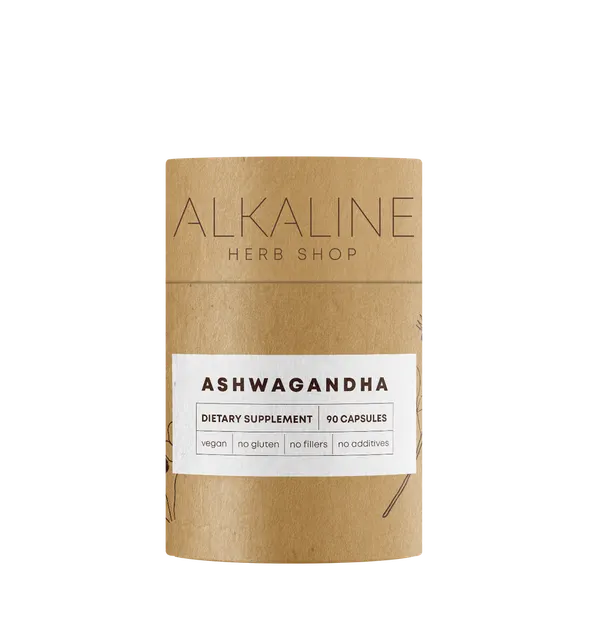
Ashwagandha Capsules, 90 Count Supplement (Ashwagandha Root)
Ashwagandha root capsules, 90 per bottle. NCCIH advises avoiding ashwagandha in pregnancy and says it may interact with several medicines, so ask a clinician first.
- Format: Capsules
- Size: 90 capsules
- Category: Herbal Supplements
- Price: $19.99 (checked November 3, 2026)
- Lab evidence: Lab results not reviewed by CannaWize
Affiliate disclosure: CannaWize may earn a commission if you buy through links on this page, at no extra cost to you. CannaWize does not sell these products. You complete your purchase on the retailer's website, and the retailer handles pricing, shipping and returns.
Frequently asked questions
Does chamomile tea help you sleep?
The evidence is not conclusive. NCCIH says there is no conclusive evidence from clinical trials showing whether chamomile helps insomnia. A 2019 meta-analysis found better sleep-quality scores across pooled trials, but the only trial that measured insomnia severity found no significant change. Sources: NCCIH and PubMed.
Is ashwagandha a sleep aid?
NCCIH says some ashwagandha preparations may be effective for insomnia and stress, and a 2021 meta-analysis of five trials found a small improvement in sleep. The trials were small and tested extract. NCCIH also lists safety concerns, including rare liver injury cases and avoiding it in pregnancy, so it is not a proven treatment for insomnia. Sources: NCCIH and PubMed.
Is lavender good for sleep or anxiety?
NCCIH says a lavender oil product taken by mouth might help anxiety, based on small studies, and that it is unclear whether lavender aromatherapy helps anxiety or sleep quality. Source: NCCIH.
Can I use sleep herbs if I also use cannabis or CBD?
We did not find a study that tested chamomile, lavender or ashwagandha together with THC or CBD, so the combined effect is unknown. The FDA warns that CBD with other drugs that slow brain activity raises the risk of sedation, and NCCIH lists sedatives among possible herb interactions. Ask a pharmacist, and read our herbs and cannabis interactions guide. Source: FDA.
Sources and further reading
- NCCIH: Chamomile
- NCCIH: Lavender
- NCCIH: Ashwagandha
- NCCIH: Sleep Disorders and Complementary Health Approaches, Usefulness and Safety
- NCCIH: Using Dietary Supplements Wisely
- Hieu et al., Phytotherapy Research 2019: Therapeutic efficacy and safety of chamomile for state anxiety, generalized anxiety disorder, insomnia, and sleep quality, a systematic review and meta-analysis
- Cheah et al., PLoS ONE 2021: Effect of Ashwagandha (Withania somnifera) extract on sleep, a systematic review and meta-analysis
- FDA: What to Know About Products Containing Cannabis or Cannabis-Derived Compounds, Including CBD
- Retailer product page: Ashwagandha Capsules 90 count (Alkaline Herb Shop)