No. Retailers can exclude states beyond what the law requires, and lists can differ between products and sizes. Check the shipping list on the exact product page and your state agency's current rules before you order.
No. A CBD product can be lawful under federal hemp law and still be something a retailer will not ship to your state. Three layers decide what reaches your door: the federal hemp definition, your state's own rules, and the seller's own shipping policy, which is often stricter than both and can differ from one product to the next. This guide explains how those layers interact, why "THC-free" is not a pass, and how to check a retailer's current list yourself.
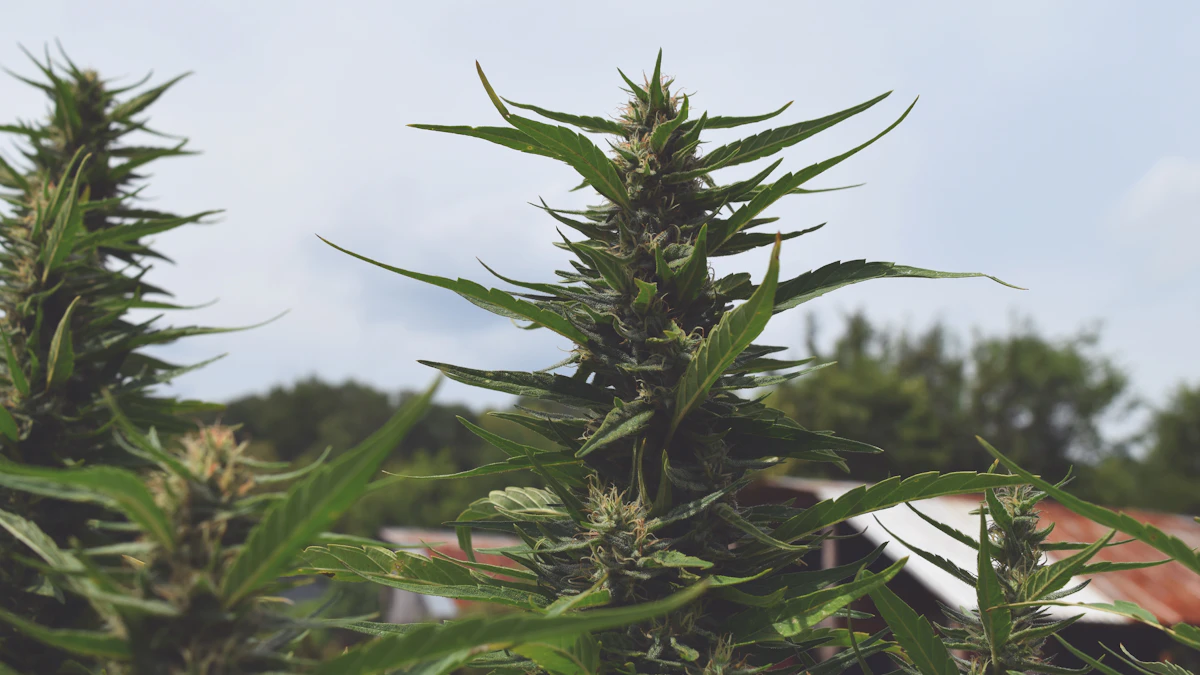
Layer one: the federal hemp definition
The 2018 farm bill removed hemp, defined as cannabis with no more than 0.3 percent delta-9 THC by dry weight, from the federal list of controlled substances. Congress changed that definition in the agriculture appropriations law enacted on November 12, 2025 (P.L. 119-37, Division B). The new text, as the Congressional Research Service summarizes it, sets the limit on total THC including THCA. It also excludes final hemp-derived cannabinoid products with more than 0.4 milligrams of total THC and similar cannabinoids combined per container, and excludes cannabinoids that are synthesized or made outside the plant.
Most of the new definition was delayed by a continuing resolution (P.L. 119-103) until December 11, 2026, according to CRS in its September 28, 2026 update. The exclusion for cannabinoids that cannot be naturally produced by the cannabis plant was scheduled for November 12, 2026. Congress has seen proposals to delay further or repeal the change, so confirm the current status on the CRS In Focus page before you rely on a date.
Layer two: the FDA
Hemp status does not equal FDA authorization. The FDA says CBD cannot be sold as a dietary supplement or added to food in interstate commerce, and that the only approved CBD medicine is the prescription drug Epidiolex. The agency treats other cannabis-derived products under the same laws that apply to any product. That is why many retailers sell CBD edibles and capsules in a legal gray area, and why some pull certain formats from certain states.
Layer three: your state
States set their own rules, and they differ widely. Some cap THC per serving or per package. Some ban certain product types such as edibles or smokable hemp. Some require licensing, age limits, labeling or testing. Because federal law leaves room for states to be stricter, a product that is lawful nationally can still be restricted where you live. A retailer that lists a state among its exclusions is making a business decision informed by that state's rules and the retailer's own legal advice.
Texas as an example
Texas regulates consumable hemp through the Department of State Health Services. The agency's Consumable Hemp Program page says that on October 2, 2025 it adopted emergency rules barring licensees and registered retailers from selling consumable hemp to customers under 21 and requiring proof of age. DSHS also posts an updated rule set for Chapter 300 dated March 31, 2026. Industry groups have challenged parts of the rules in court, and reports differ on what is enforceable, so check DSHS for the status that applies when you read this. For more on how the federal delay interacts with Texas rules, see our report on the federal hemp delay and Texas rules.
Manufacturer and retailer shipping policies
A seller's list of states it will not ship to can be longer than the law requires. Sellers may exclude states where rules are unclear, where licensing is costly, or where past enforcement worried them. The list may also depend on the product. When CannaWize read NuLeaf Naturals product pages on October 28, 2026, the "not shipped to" lists were different from one product to the next. Some broad-spectrum oils did not list Texas. Several broad-spectrum softgels and gummies did. Within a single product line, the list can vary by size. The same page can show a state in a shipping dropdown while its disclaimer excludes that state.
That is why CannaWize does not publish a master table of which states each retailer ships to. Lists change, and a table we published today could be wrong next week. Our product cards carry a shipping notice and the date we checked, and they never claim nationwide availability. We do not suggest ways around a seller's restrictions, such as shipping to another address. If a product is not offered where you live, treat that as the answer.
Product-specific THC limits
The THC in a finished product depends on the formulation. A full-spectrum oil with trace THC is a different regulatory object from a broad-spectrum oil tested at non-detect. Under the new federal definition, the per-container ceiling of 0.4 milligrams of total THC and similar cannabinoids combined is the number that makes small amounts matter. At the same time, as of CRS's September 28, 2026 update, FDA had not published the lists and the definition of "container" the law calls for, so even careful sellers are working with open questions. Some brands are reformulating or reviewing their THC-containing lines ahead of the deadline.
Why "THC-free" does not guarantee unrestricted shipping
- It is a claim, not a standard. A report that says "ND" reflects a detection limit. See how to read a CBD lab report.
- State rules can cover more than THC. A state may restrict a format, ingredient, flavor, potency or label claim.
- Sellers decide. Even where a product is lawful, a seller can choose not to ship it.
- Other ingredients matter. Some CBD gummies add melatonin or botanicals, which can change how regulators view them.
How to verify a retailer's current shipping policy
- Open the product page for the exact item and size you want, not a category page.
- Read the shipping disclaimer or "not shipped to" list on that page.
- Select your state in the retailer's selector, if there is one, and see whether the product stays available at checkout.
- Check the retailer's shipping and policy pages for age requirements and returns.
- Contact the seller if the page is inconsistent, and keep the reply.
- Check your state agency's website for current hemp or CBD rules, because retailer pages can lag behind changes.
How this affects shopping on CannaWize
Our CBD shop includes only broad-spectrum products that clear a documented review, and each card shows the shipping note for that item with the date we checked. The retailer completes the sale and the retailer's policy governs. CannaWize may earn an affiliate commission, as described on the NuLeaf Naturals partner profile. If your state is excluded for a product, the product page will not be able to ship it to you, and you should not try to get around that.
Affiliate disclosure: CannaWize is a FlexOffers affiliate of NuLeaf Naturals and may earn a commission if you buy through links on this page, at no extra cost to you. CannaWize does not sell these products or process orders. You buy from the retailer, which sets prices and handles shipping and returns.
Health and legal information: This page is educational and is not medical or legal advice. The FDA has not approved CBD products other than the prescription drug Epidiolex, and it says CBD cannot be sold as a dietary supplement or added to food in interstate commerce. Statements by manufacturers have not been evaluated by the FDA. Talk with a doctor or pharmacist before using CBD, especially if you take medication, are pregnant or breastfeeding, or are subject to drug testing. Shipping restrictions vary by product and destination, and laws are changing.
Sources and further reading
- Congressional Research Service, IF13136: Changes to the Statutory Definition of Hemp (updated Sept. 28, 2026)
- FDA: Regulation of Cannabis and Cannabis-Derived Products, Including CBD
- Texas DSHS: Consumable Hemp Program
- Texas DSHS: Chapter 300 consumable hemp rules (March 31, 2026)
- TABC: Consumable hemp products