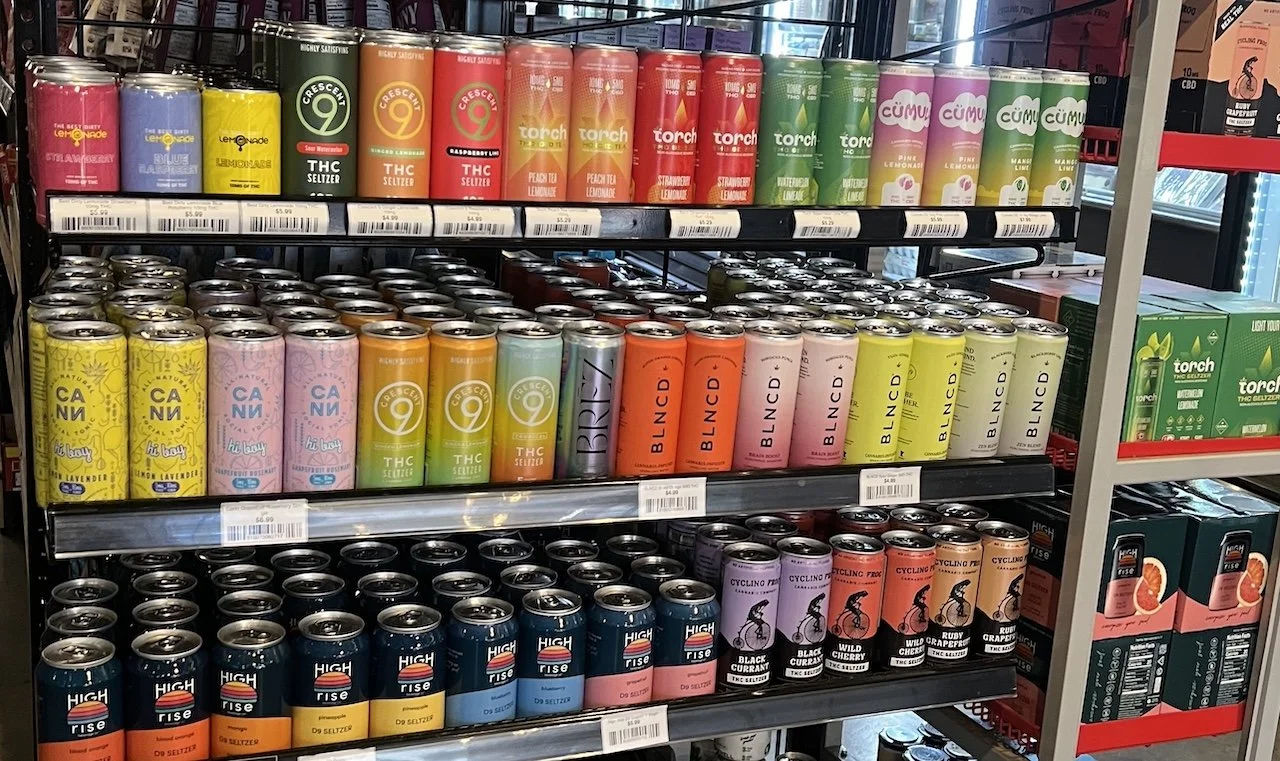
Reps. Beth Van Duyne (R-TX-24) and Greg Landsman (D-OH-01) have introduced the Beverage Regulatory Parity Act, a federal bill that would carve hemp-derived THC drinks out of the broader hemp ban set to take hold this winter and give the beverage category its own regulatory system instead, modeled directly on federal alcohol law. CannaWize reviewed a copy of the bill's legislative text, dated the night of August 9. It builds a three-tier distribution system, a new federal excise tax, and strict serving and container limits for hemp-derived beverages specifically. It does not mention smokeable hemp, vapes, edibles, tinctures, topicals, or any other hemp product category.
Van Duyne, who chairs the House Small Business Subcommittee on Economic Growth, Tax, and Capital Access, has spent months circulating draft hemp beverage legislation, most recently reported under the working title Hemp-Derived Beverage Regulatory Clarity Act. The bill introduced this week is retitled the Beverage Regulatory Parity Act, now carries Landsman as a Democratic original cosponsor, and lowers the excise tax previously reported at 10 cents per milligram to 8 cents per milligram. As of publication, the bill had not yet appeared on Congress.gov with an assigned H.R. number or committee referral; the legislative text reviewed by CannaWize leaves both blank, which is standard for text sent to the House Office of Legislative Counsel just ahead of formal introduction. CannaWize will update this article once the bill is posted publicly with a bill number.
What the Bill Actually Does
The bill splits regulatory authority across three federal offices. The Secretary of Agriculture is directed to exempt compliant hemp-derived beverages from the per-container intoxicating-cannabinoid limit set by last year's federal hemp redefinition, so long as the drink follows the new rules instead. The Food and Drug Administration is directed to treat hemp-derived beverages as a regulated food, with new adulteration and misbranding provisions specific to the category. The bulk of the framework, though, sits with the Treasury Department's Tax and Trade Bureau (TTB), the same agency that already regulates beer, wine, and spirits, which would write and enforce the three-tier system, permitting, labeling, and advertising rules.
A Three-Tier System Copied Straight From Alcohol Law
The bill's centerpiece is a mandatory three-tier distribution structure: manufacturers can sell only to wholesalers, wholesalers can buy only from manufacturers and sell only to retailers, and retailers can buy only from wholesalers. No person or company can hold an interest in more than one tier at a time, mirroring the "tied-house" separation rules that have governed the alcohol industry since Prohibition's end. The TTB would issue permits at each tier, and manufacturer permits would require certification on cannabinoid content, contaminants, sourcing, manufacturing and testing standards, lab sample submission, recordkeeping, and facility inspections.
Labeling and advertising requirements are explicitly tied to the existing Federal Alcohol Administration Act, the same statute governing how beer and liquor can be marketed. Labels would need a uniform panel disclosing servings and milligrams per cannabinoid, warnings for pregnant people and those on medications, impairment and driving warnings, expected onset time, the 21-and-over requirement, and a notice that the product may cause a consumer to fail a workplace drug test for marijuana. Violations carry misdemeanor penalties of up to $1,000 per offense, with each beverage sold in violation of the rules by a retailer counted as a separate violation.
What Counts as a Legal "Hemp-Derived Beverage"
The bill's definition section is narrow by design. To qualify, a product must be a non-alcoholic liquid containing only "naturally-occurring" cannabinoids, defined as non-synthetic delta-9 THC, CBD, CBG, or another cannabinoid the TTB later approves. It cannot contain any synthetically-derived cannabinoid, defined broadly enough to cover anything chemically converted, isomerized, or produced through lab synthesis rather than routine extraction and purification. That language appears written to exclude products like HHC, THC-O, or delta-8 converted from CBD, not just fully synthetic compounds. The cannabinoids have to come from hemp grown in the United States, and the finished drink has to be packaged and labeled here too. It can't be a tincture, isolate, powder, or distillate, can't be marketed as a dietary supplement, and can't contain any drug ingredient covered by an existing FDA drug approval.
The bill also carves out protection for bulk "intermediate" cannabinoid material used to manufacture the beverages, which can temporarily run hotter than the 5-milligram finished-product limit during processing, capped at 20 percent total THC by weight, as long as it stays exclusively in the hands of TTB permit holders and never reaches a consumer directly. That provision matters because manufacturers typically work with concentrated cannabinoid extract before it's diluted into a finished can or bottle, and without it, the manufacturing process itself could technically violate the same container limits the bill is trying to create an exception around.
The Tax and the Paper Trail
The bill adds a new chapter to the federal tax code imposing an 8-cent-per-milligram excise tax on the intoxicating THC content of every hemp-derived beverage produced in the United States, collected in a manner similar to the existing federal beer excise tax, attaching when the product leaves the manufacturer's premises for sale. Separately, the TTB is directed to write "product tracking" regulations covering the full supply chain, from the cultivation of the cannabinoid to the finished product on a store shelf. This is the kind of end-to-end traceability that state-licensed marijuana programs already use for their own products.
States Still Get the Final Word
The bill does not preempt state, local, or tribal authority. States can regulate hemp-derived beverages more strictly than the federal floor, set equivalent rules, or ban them outright, and the bill's savings clauses specifically preserve state advertising, labeling, and product-liability law where it's tougher than what Van Duyne and Landsman are proposing. A beverage that clears every federal requirement in this bill would still have to satisfy whatever a given state, including Texas, separately requires.
What's Not in This Bill
The name borrows the language of "parity," but the parity here is between THC drinks and alcohol, not between drinks and every other hemp product. Flower, THCA flower, vapes, edibles, tinctures, topicals, and capsules do not appear anywhere in the bill's text. Those categories remain fully subject to whatever the underlying federal hemp redefinition ends up requiring once the current delay expires, a deadline our earlier coverage of the Senate's vote to push that deadline to December 11 and the federal delay's relationship to Texas rules has tracked closely.
There is one bill in Congress with a broader scope. The Lawful Hemp Protection Act, introduced in July by Rep. Andy Barr (R-Ky.) and Rep. Angie Craig (D-Minn.), would raise the hemp definition itself to 1 percent total THC by dry weight and set default per-serving limits across oral, inhalable, and topical products, not just beverages. That bill has drawn industry backing from groups including the Hemp Beverage Alliance and the U.S. Hemp Roundtable. But as of this week, it hadn't attracted a companion beverage-specific bill of its own to work alongside, and it faces the same crowded committee calendar as the Beverage Regulatory Parity Act. Two bills with different scopes are now competing for the same narrow legislative runway before December 11, and only the beverage-only version has a bipartisan pair of named sponsors willing to attach their names to this level of specificity: an actual tax rate, exact container sizes, a defined three-tier structure.
The Pattern We Keep Seeing
This is the third time in recent weeks that CannaWize's reporting has landed on the same shape. Our coverage of Target's beverage expansion into Texas stores and of the Senate's vote to delay the broader hemp ban both point the same direction: a low-dose, alcohol-adjacent beverage that fits inside a small milligram number is an easier thing for lawmakers, retailers, and regulators to build rules around than a product like flower, where potency is measured as a percentage of the product's own weight rather than a fixed dose per serving.
That is a defensible regulatory instinct on its own terms. A 5-milligram can is simpler to standardize, tax, and put an age gate on than a jar of flower with variable potency. But it also means the bill that is actually moving right now, with two named sponsors from opposite parties, is the one that leaves the traditional hemp market's largest product category completely out of its text. Retailers and consumers whose business is built around flower, pre-rolls, and concentrates are not getting a comparable bipartisan bill of their own this week. If this pattern holds through December 11, the shape of the legal hemp market on the other side of that deadline could look a lot more like a beverage cooler than a dispensary shelf.
What Happens Next
- The bill still needs a formal H.R. number and a committee referral, most likely to the House Ways and Means and Energy and Commerce Committees, based on the reporting requirements written into the bill's own text.
- No Senate companion bill has surfaced yet. Without one, even a successful House vote would not become law on its own.
- Whatever Congress does here has to happen before, or alongside, the December 11 deadline already set by the delayed hemp ban, or hemp-derived beverages fall under the same restrictive container cap as every other hemp product.
- CannaWize will update this article once the bill receives an official number, a committee referral, and any additional cosponsors.
Primary Sources
- Legislative text of the Beverage Regulatory Parity Act, 119th Congress, 2d Session (dated August 9, 2026), reviewed directly by CannaWize
- Rep. Beth Van Duyne, official website
- Rep. Greg Landsman, official website
- Marijuana Moment: GOP Lawmaker Circulates Bill To Keep Hemp THC Drinks Federally Legal
- Rep. Andy Barr: Barr Introduces Lawful Hemp Protection Act
- CannaWize: Senate vote delaying the federal hemp THC ban
- CannaWize: How the federal delay relates to Texas rules